

As the FIFA World Cup 2026 approaches, new research from Dynatrace reveals that many national football federation websites and sponsor platforms may not be fully prepared to handle the massive surge in online traffic expected during the tournament.
With the 2026 edition set to be the largest World Cup in history featuring 48 teams digital platforms will play a central role in the fan experience. From ticket bookings and fixtures to live updates and merchandise, fans will rely heavily on online touchpoints even before the tournament begins.
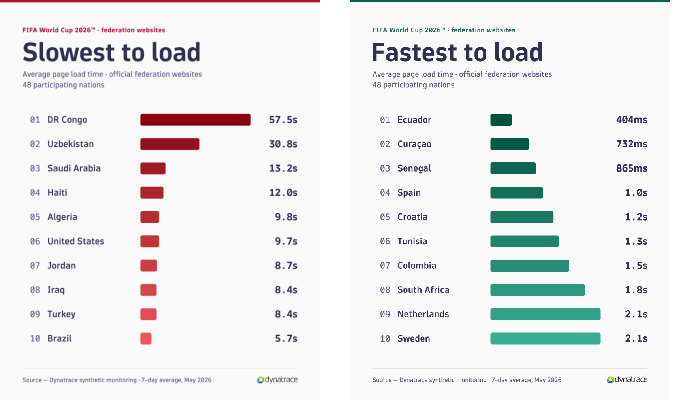
However, the study highlights significant performance gaps. On average, football federation websites take nearly six seconds to load, with some sites performing far worse. DR Congo recorded the slowest load time at 57.5 seconds, followed by Uzbekistan (30.8 seconds) and Saudi Arabia (13.2 seconds). Even host nation United States ranked among the slowest, with a 9.7-second load time.
“Fans expect fast, seamless digital experiences but even small delays can impact engagement, revenue, and brand reputation.”
— Bob Wambach, VP, Market and Customer Insights, Dynatrace
In contrast, top-performing countries such as Ecuador, Curaçao, and Senegal delivered fast load times under one second, demonstrating what is achievable with optimized digital infrastructure.
The analysis attributes poor performance to common issues such as image-heavy content, excessive page requests, and inefficient loading processes. These factors can significantly impact user experience, especially during peak traffic periods.
The report also examined digital performance among 21 official World Cup sponsors across sectors. Retail and consumer service brands performed the worst, with average load times of 14.6 seconds, followed by hospitality and travel at 12 seconds. Automotive and consumer goods sectors performed better, with load times below four seconds.
These disparities highlight a broader challenge as organizations prepare for high-traffic global events. Slow or unresponsive platforms during critical moments can lead to reduced fan engagement, lost revenue opportunities, and potential reputational damage.
As digital engagement becomes central to global sporting events, the findings underscore the importance of continuous monitoring, optimization, and scalability. Organizations must ensure their platforms are capable of delivering fast, seamless, and reliable experiences under pressure.
With billions of fans expected to engage online during the World Cup, digital readiness is no longer optional it is essential to delivering a successful and immersive global event experience.
