

Pemo’s first SME Spend Index finds that 29% of businesses paid for AI tools in Q3 2026, with technology and marketing firms leading adoption.
Artificial intelligence is moving from experimentation into everyday business spending across the UAE, with small and medium-sized enterprises (SMEs) significantly increasing their investment in AI tools. According to the inaugural Pemo SME Spend Index, businesses spent five times more on AI in the third quarter of 2026 than in the corresponding period last year.
Based on millions of anonymised business transactions, the quarterly index offers an insight into how UAE SMEs are allocating their budgets and where technology investments are gaining momentum. It found that 29% of businesses paid for at least one AI tool during Q3, while the typical business investing in AI spent AED 268 per month.
Although AI still accounts for less than 1% of overall card spending, it represents approximately a quarter of software expenditure. Its adoption has also moved ahead of certain traditional business expenses: more companies paid for AI tools than hotel stays (17%) or flights (16%).
Technology companies are leading adoption, with half of businesses in the sector paying for AI tools and median monthly spending reaching AED 880. Marketing agencies are close behind, with 46% using paid AI services. AI accounts for 6% of their card spending, compared with 5% among technology companies, indicating a relatively greater budget commitment.
Adoption is also extending into established industries. The index found that 38% of real estate businesses and 35% of professional services firms paid for AI tools. Construction and hospitality are at an earlier stage, with adoption rates of 17% and 16%, respectively.
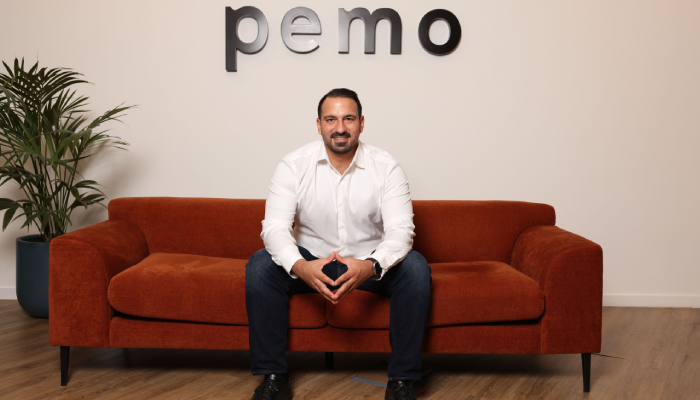
“AI has moved from a talking point to a line in the budget for a growing number of businesses.” — Ayham Gorani, Co-founder and CEO, Pemo
The competitive landscape among AI providers is also taking shape. Anthropic, the developer of Claude, emerged as the largest AI provider by spending in most sectors. It led adoption among technology, real estate and professional services firms, while OpenAI was more prominent in media, events, healthcare and construction.
Ayham Gorani, Co-founder and CEO of Pemo, said the company’s transaction data provides a view of how business priorities are changing. He described spending as a practical indicator of where SMEs see growth opportunities and are prepared to invest. According to Gorani, AI is increasingly becoming a budget priority rather than simply a technology talking point.
The findings align with the UAE’s broader ambition to accelerate AI adoption under its National Strategy for Artificial Intelligence 2031. However, the sector-level differences suggest that adoption is progressing unevenly, with technology-intensive businesses moving faster than traditional industries.
Pemo plans to publish the index quarterly, alongside sector-specific editions. The next report, covering Q4 2026, is expected in January 2027.
The findings should be viewed in the context of the index’s methodology: it reflects settled transactions made by Pemo customers using its cards, rather than a representative sample of all UAE SMEs. Its AI tracking covers approximately 45 AI-native vendors and excludes AI capabilities bundled into broader Microsoft and Google software suites. The actual level of AI use across businesses may therefore be higher.
