

Why cybersecurity leaders at GISEC Global 2026 believe the future of defence lies in unified visibility, identity-centric security, and understanding enterprise exposure through an attacker’s eyes
At GISEC Global 2026, a clear theme has emerged from conversations with cybersecurity leaders: the greatest risks to modern enterprises no longer reside within individual systems. They lie in the connections between them.
As cloud platforms, identities, applications, endpoints, IT infrastructure and operational technology become increasingly interconnected, attackers are capitalising on the gaps created by that convergence. The industry’s response is evolving accordingly, shifting away from simply deploying more security tools and toward unified visibility, coordinated defence, identity-centric security and external exposure management.
“The real exposure isn’t within any one domain. It’s at the boundaries where they meet,” says Harish Chib, Vice President for Emerging Markets, Middle East & Africa at Sophos.
For Chib, the modern attack surface is defined less by isolated vulnerabilities and more by the relationships between systems. Organisations may implement strong controls across cloud, identity, endpoints, email and operational technology, yet attackers rarely target these environments in isolation.
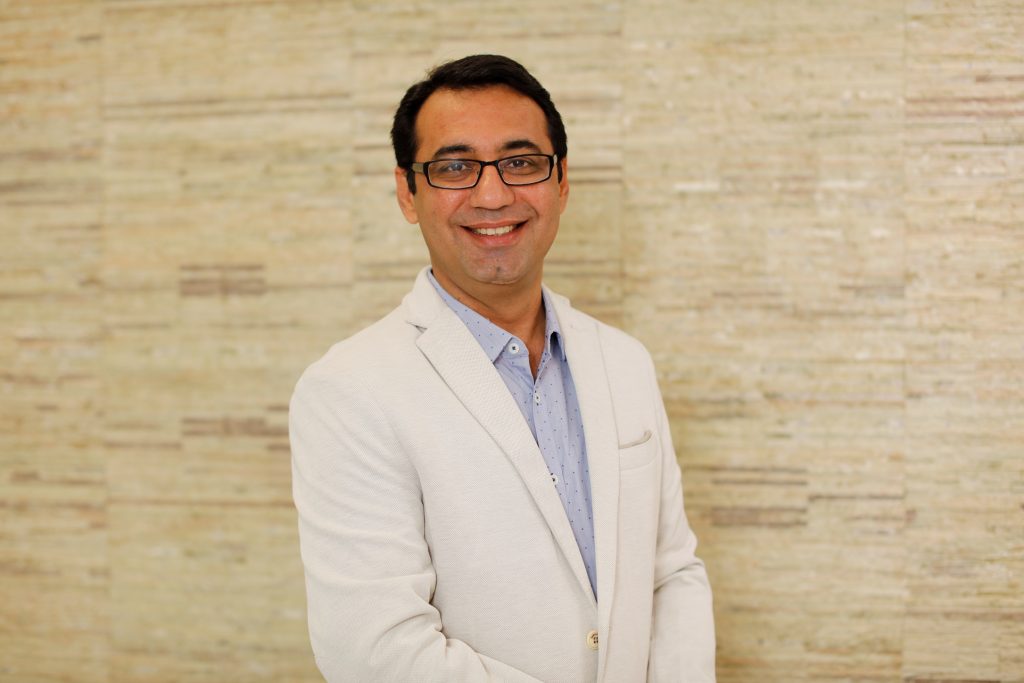
“Attackers rarely attack head-on. They find the seam.”
Harish Chib, Vice President, Emerging Markets, Middle East & Africa, Sophos
A compromised credential can become a bridge from identity into cloud infrastructure. An overlooked integration can provide a path to sensitive data. A weakness in one environment can quickly cascade into another.
“Attackers rarely attack head-on,” says Chib. “They find the seam.”
That seam is becoming increasingly difficult to monitor as organisations build complex hybrid and multi-cloud environments. Security teams often maintain visibility within individual domains, yet struggle to understand how risks move across them.
Visibility Becomes the Foundation
Praneeth V, Technical Evangelist at ManageEngine, sees the challenge from an operational perspective.
“The biggest security gaps are emerging at the points where different environments intersect,” he says.
According to Praneeth, the issue is no longer a lack of technology. The challenge is achieving consistent visibility and governance across an expanding digital ecosystem that includes multiple clouds, hundreds of applications, unmanaged devices and a growing number of human and machine identities.
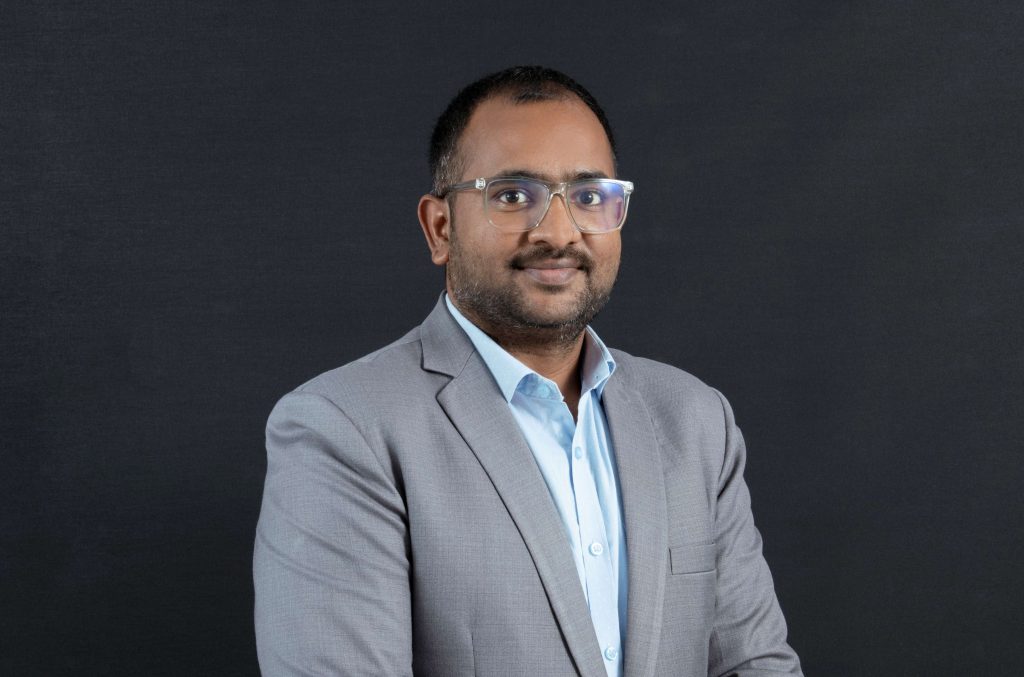
“You cannot defend what you cannot see.”
Praneeth V, Technical Evangelist, ManageEngine
“You cannot defend what you cannot see.” That principle is pushing identity to the centre of security strategy.
Modern enterprises are managing not only employees but also privileged accounts, service identities, machines, applications and third-party connections. Without a unified view, security teams risk losing control over who has access to what and how that access is used.
The answer, Praneeth argues, is a move from siloed security operations toward integrated visibility, continuous monitoring, identity governance and automation.
“The objective should be resilience by design rather than simply adding more security tools.”
From Security Products to Security Platforms
The discussion at GISEC reflects a broader shift in cybersecurity thinking.
The key question is no longer whether organisations have the right security products. It is whether those products function as a coordinated defence system.
Sophos believes fragmented telemetry and disconnected workflows can prevent security teams from understanding an attack as it traverses multiple environments.
“Organizations should rethink cybersecurity as a coordinated defense system rather than a collection of disconnected products,” says Chib.
The emphasis is on connecting telemetry, detection, investigation and response into a single operational framework. This becomes even more important as threat actors increasingly use AI to accelerate reconnaissance, social engineering and intrusion activities.
At GISEC, Sophos is showcasing Sophos Fusion, its AI-native cybersecurity architecture that unifies security operations, endpoint, network, identity, email and cloud security with managed detection and response, SIEM and XDR capabilities, supported by more than 500 integrations.

“The attacker treats cloud, identity, IT and OT as one route.”
Meriam ElOuazzani, Vice President, Middle East, Turkey & Africa, Censys
Rather than replacing existing security investments, the strategy focuses on bringing them together through an open and interconnected architecture.
ManageEngine is pursuing a similar goal through AI-driven automation and identity-centric security.
The company is demonstrating its Zia Agents, autonomous AI capabilities designed to assist with alert correlation, endpoint detection and response triage, access reviews and incident investigations. It is also highlighting Identity360, which extends identity governance across hybrid, multi-platform and unmanaged environments.
“Our key theme for GISEC Global 2026 is using AI, unified visibility, and identity-centric security to build more resilient enterprises,” says Praneeth.
Yet ManageEngine stresses that automation must remain accountable.
“AI can play an important role by correlating signals across environments and accelerating detection and response, but it must operate within clearly defined governance and access controls.”
Seeing the Enterprise Through an Attacker’s Eyes
For Meriam ElOuazzani, Vice President for Middle East, Turkey & Africa at Censys, organisations must go a step further.
“A CISO in this region does not need another dashboard,” she says. “The organisation needs to own the paths between systems because the attacker treats them as one route.”
Her point highlights a growing blind spot in enterprise security. Organisations may possess extensive internal telemetry and monitoring capabilities, yet still fail to understand what is visible to attackers from the outside.
From an adversary’s perspective, cloud assets, identities, internet-facing services and operational systems are not separate categories. They represent interconnected pathways into an organisation.
“The gap is not inside any one technology,” ElOuazzani explains. “Cloud, identity, IT and operational systems each have controls, but exposure appears when data moves and when they trust one another.”
As digital transformation accelerates across the Middle East and regulatory expectations continue to rise, organisations increasingly need continuous awareness of their externally visible attack surface.
“Under UAE frameworks and Saudi Vision 2030, the question is how quickly a team can see what is exposed, decide who should act, and prove the result to a regulator.”
According to ElOuazzani, maintaining current visibility is becoming a strategic requirement.
“Cybersecurity has always been a data problem, but in connected estates, stale data is a planning error.”
Identity Is the New Battlefield
The convergence of environments is also transforming the nature of cyberattacks.
“What I’ve watched shift this year is that authentication has become the battlefield,” says ElOuazzani.
Rather than breaking through perimeter defences, attackers increasingly rely on legitimate credentials, trusted access paths and identity-based attacks.
Her conclusion is direct:
“Attackers are no longer breaking through defenses. They are walking through the front door.”
That observation resonates across all three vendors.
Sophos continues to identify compromised credentials as a leading factor in ransomware incidents, while ManageEngine points to the growing complexity of managing human, privileged, machine and application identities across modern enterprises.
Together, their perspectives point to a significant shift in security strategy: identity can no longer be treated as a standalone discipline. Organisations must understand not only who or what an identity belongs to, but also what that identity can access, which systems trust it and how those relationships evolve over time.
The New Mandate for CISOs
For Censys, external attack surface management provides the missing context.
“At Censys, we give enterprises the attacker’s view of their own infrastructure before the attacker uses it,” says ElOuazzani.
Combined with the visibility and automation strategies championed by Sophos and ManageEngine, the objective is not simply collecting more security data. It is understanding how individual exposures combine into viable attack paths.
That shift is also redefining the role of the modern CISO.
Security leaders must increasingly connect technical risk with business ownership, regulatory accountability and operational response. Identity teams need visibility into actual access privileges. Security operations centres need contextual intelligence to distinguish isolated alerts from coordinated attacks. Cloud and OT teams need clear ownership of shared assets and exposure points.
As Praneeth summarises: “Ultimately, our message at GISEC is about turning visibility into action and automation into resilience while ensuring AI adoption remains governed and accountable.”
The message emerging from GISEC Global 2026 is unmistakable. The enterprise is no longer a collection of isolated systems. It is a connected ecosystem, and attackers already understand how those connections work.
The organisations best positioned to defend themselves will be those that understand the seams just as well as their adversaries do.
