

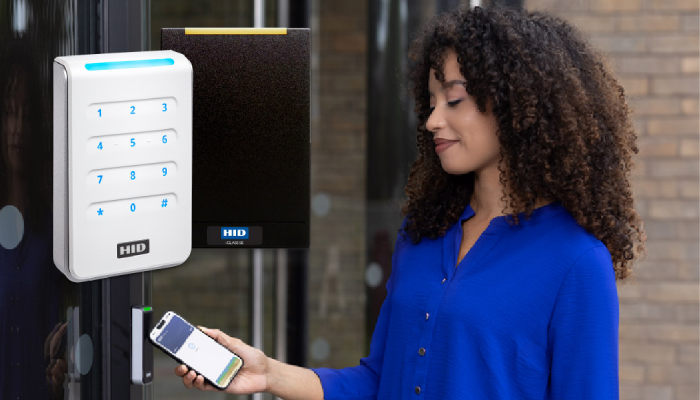
HID has announced a series of enhancements designed to help organizations accelerate the adoption of mobile access credentials without the cost and complexity typically associated with large-scale access control upgrades. The latest updates enable enterprises to leverage existing infrastructure, reduce deployment time, and simplify the transition to digital identity-based access management.
A major challenge in mobile access deployments has traditionally been the need to replace or reconfigure installed readers across multiple locations. HID’s latest innovation addresses this issue by enabling HID mobile-ready readers, including HID Signo™ and iCLASS® SE™, to utilize existing Seos® keys through the HID Mobile Access App. This eliminates the need for reader replacement, firmware updates, or extensive onsite maintenance, significantly lowering deployment costs and accelerating implementation timelines.
“Organizations should not have to choose between maintaining existing access control infrastructure and adopting mobile credentials. The future of secure access lies in leveraging existing investments while accelerating digital transformation.”
– Gustavo Gassman, Vice President, Emerging Markets, PACS, HID
The announcement reflects a growing trend in physical security and identity management, where organizations are increasingly moving away from traditional access cards toward smartphone-based credentials. Mobile access not only improves user convenience but also strengthens security through encrypted digital identities and centralized credential management.
HID has also expanded support for Samsung Wallet, allowing users to store and use mobile credentials through a digital wallet platform they already use daily. The move is expected to boost mobile credential adoption by reducing friction and enhancing user experience.
Another key enhancement is HID Linq™ Mobile, which allows administrators to configure, update, and manage compatible readers directly from a smartphone or mobile device. Using Bluetooth Low Energy (BLE) and NFC technologies, firmware updates and reader provisioning can be completed in the field without specialized tools, reducing operational overhead for security teams and integration partners.
From a security and workplace technology perspective, the announcement highlights the continued shift toward mobile-first identity management strategies. By enabling organizations to modernize access control systems without replacing existing hardware, HID is helping enterprises improve operational efficiency, enhance user experience, and maximize return on existing infrastructure investments while supporting long-term digital transformation initiatives.
