

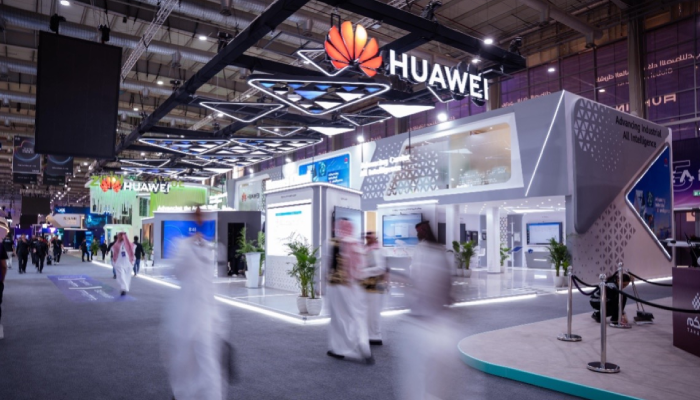
Company showcases AI infrastructure, sovereign cloud capabilities, and ecosystem investments aimed at supporting Vision 2030
Huawei has reaffirmed its commitment to Saudi Arabia’s digital transformation agenda, unveiling its vision for accelerating AI adoption through full-stack capabilities spanning connectivity, computing, cloud infrastructure, and ecosystem development.
Speaking at LEAP 2026, the company emphasized that the next phase of Saudi Arabia’s digital growth will require more than deploying AI applications. Instead, organizations will need an integrated foundation that combines advanced networks, AI-ready infrastructure, cloud platforms, and local talent development to deliver long-term economic value.
The announcement comes as Saudi Arabia’s ICT sector continues to expand rapidly. According to Huawei, the Kingdom’s ICT market has grown to US$53 billion, while the digital economy now contributes approximately 16% of GDP. With 5G coverage reaching 86%, Saudi Arabia has established a strong digital backbone that can support large-scale AI deployments across public and private sectors.
Huawei is positioning its full-stack AI portfolio as a key enabler of this transition. The company highlighted its investments in AI-enhanced technologies such as Agentic RAN, AI OTN, and AI WAN, alongside core networking technologies including 5G, routing, and optical transport infrastructure.
Beyond connectivity, Huawei has expanded its in-house capabilities across critical technology domains, including AI processors, compute infrastructure, storage technologies, optical modules, and networking chips. The company noted that it continues to invest more than 20% of its annual revenue into research and development, reflecting the strategic importance of AI and digital infrastructure to its long-term growth plans.
A major focus area is enabling AI workloads at scale. Huawei’s portfolio includes AI computing platforms such as the Atlas SuperPoD, which supports up to 8,192 NPUs, providing the processing capacity required for large-scale AI training and inference workloads.
Cloud infrastructure is another pillar of Huawei’s strategy in Saudi Arabia. The company operates Class C 3AZ public cloud nodes, the Kingdom’s highest security classification, enabling organizations to keep data within national borders while meeting sovereign cloud and digital security requirements. Huawei says the infrastructure can deliver response times below 25 milliseconds, supporting applications that require low latency and high availability.
The company is already working with organizations across sectors including government, energy, and financial services, helping deploy AI-driven applications while supporting compliance, security, and performance requirements.
Huawei is also placing significant emphasis on ecosystem development. The company collaborates with more than 800 global software vendors, 1,500 local system integrators, and 300 delivery partners to create an environment that combines international technology expertise with local implementation capabilities.
“Saudi Arabia has built a strong digital foundation. The next phase is about turning AI investments into industry outcomes through integrated connectivity, compute, cloud, and ecosystem capabilities that can scale securely across the economy.”
Talent development remains central to this effort. Through more than 30 ICT Academies across Saudi Arabia, Huawei says it contributes to developing local digital skills by helping train approximately 10,000 ICT professionals annually. These initiatives align with broader national objectives to build a sustainable technology workforce capable of supporting the Kingdom’s long-term digital ambitions.
The company’s message at LEAP 2026 reflects a broader industry shift. As AI adoption moves from experimentation to production, organizations are increasingly looking for platforms that combine infrastructure, governance, security, and ecosystem support rather than standalone AI applications.
By investing across connectivity, AI computing, cloud infrastructure, ecosystem partnerships, and workforce development, Huawei is positioning itself as a long-term technology partner in Saudi Arabia’s Vision 2030 journey. The company believes that sustainable AI adoption will depend on creating a complete digital foundation that enables organizations to move beyond AI pilots and generate measurable business and societal value.
