


Six integrated security solutions and AI Specialists aim to help enterprises prevent, detect, and remediate threats at machine speed
ServiceNow has accelerated its Autonomous Security vision with the launch of six integrated security solutions designed to help organizations move from reactive cybersecurity practices to prevention-first, AI-native defense. The new offerings introduce AI-powered security specialists capable of autonomously handling critical workflows across exposure management, vulnerability remediation, identity security, cyber-physical protection, incident response, and compliance.
The announcement comes as enterprises face growing security challenges driven by the rapid adoption of AI agents, cloud services, machine identities, and increasingly complex digital ecosystems. According to ServiceNow, most organizations manage more than 70 separate security tools, creating fragmented visibility and slowing response times as threats evolve at machine speed.
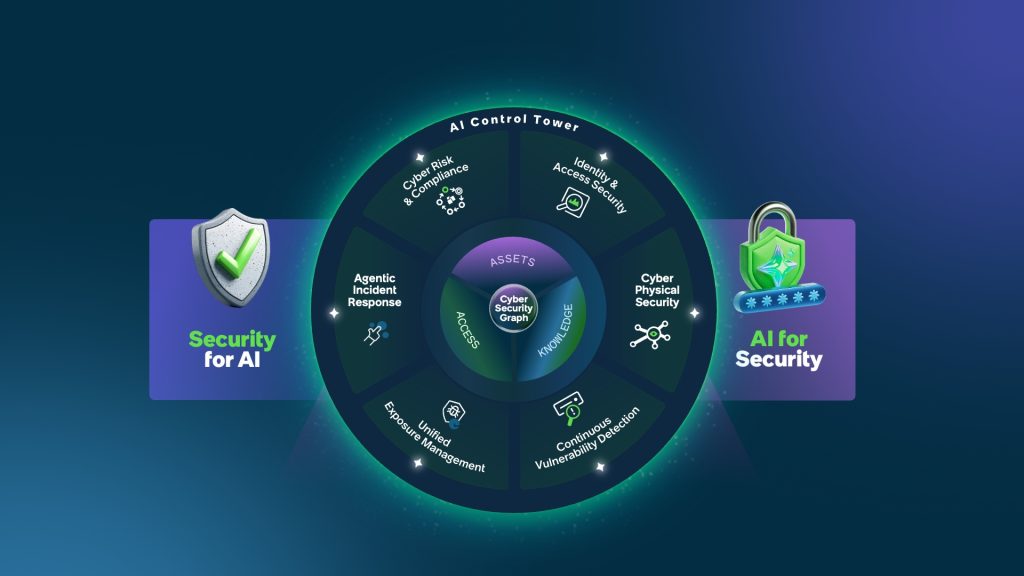
ServiceNow’s Autonomous Security platform addresses this challenge by consolidating security, governance, and risk management into a single system that provides visibility across assets, identities, AI agents, cloud environments, infrastructure, and operational technology. The company describes this strategy as “Shift Zero,” a prevention-first security model aimed at maintaining near-zero exposure through continuous governance and automated remediation.
“As AI exposures compound exponentially, security teams operate on a human clock. Organizations need autonomous security and governance that can match the scale, velocity, and unpredictability of AI-driven threats.”
Yevgeny Dibrov, SVP & General Manager, Cybersecurity and Risk, ServiceNow
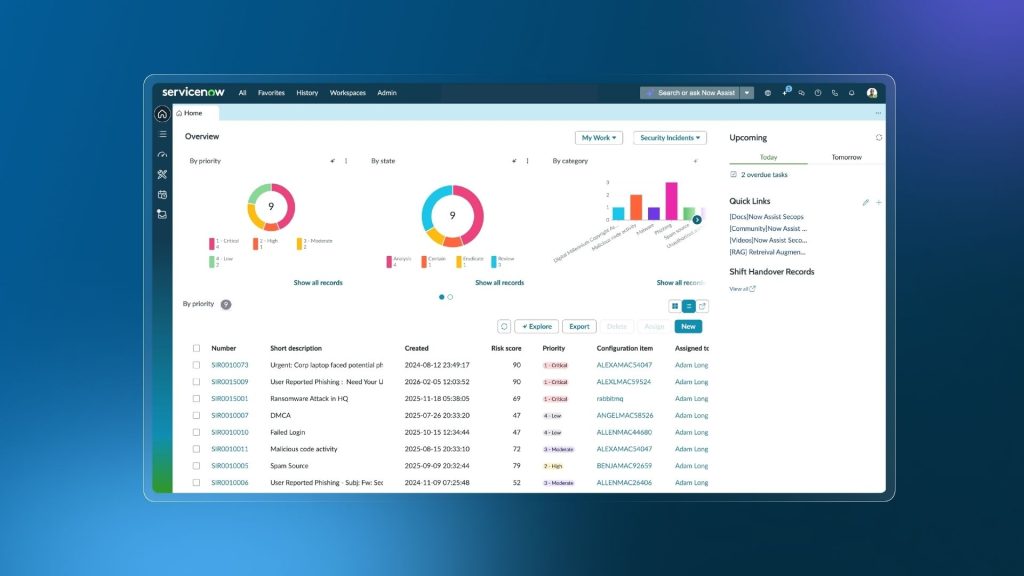
At the center of the platform are new AI Specialists that can autonomously execute security tasks. Among them is the Vulnerability Resolution AI Specialist, designed to identify, prioritize, and remediate vulnerabilities at scale. The company says these AI-driven capabilities can significantly reduce remediation backlogs by automating low-risk patching and vulnerability management workflows.
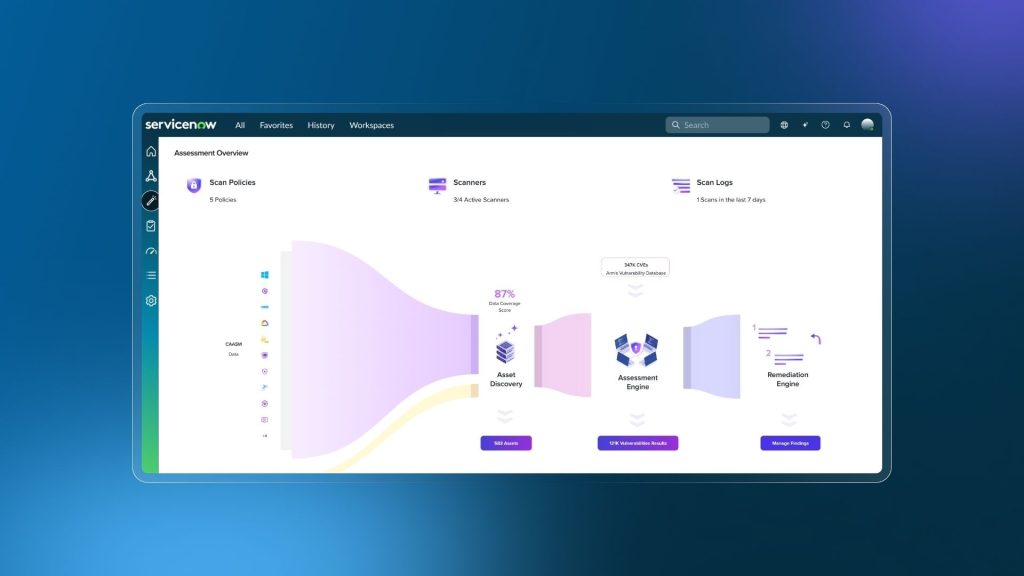
The platform’s Unified Exposure Management capabilities consolidate vulnerability findings from multiple sources and enrich them with threat intelligence and business context, enabling security teams to focus on the most critical risks. At the same time, Continuous Vulnerability Detection extends visibility across applications, cloud environments, infrastructure, and APIs through application security testing, dynamic security validation, and external attack surface management.
Recognizing the growing importance of operational technology and critical infrastructure security, ServiceNow also introduced enhanced Cyber-Physical Security capabilities. These features provide agentless discovery, behavioral monitoring, compliance validation, and attack-path analysis for OT environments, IoT devices, and medical systems without disrupting operations.
Identity security represents another major focus area. With organizations increasingly relying on non-human identities, AI agents, automated workflows, and service accounts, ServiceNow has launched AI Agent Access Security and Non-Human Identity Remediation capabilities. These tools provide centralized visibility and governance for human and machine identities while supporting automated key rotation, access reviews, deprovisioning, and least-privilege enforcement.
The new Agentic Incident Response solution introduces autonomous investigation and response capabilities. Using AI-powered security operations workflows, the platform can triage incidents, correlate data, perform enrichment activities, contain threats, and execute remediation steps automatically while escalating only high-risk decisions to human analysts.
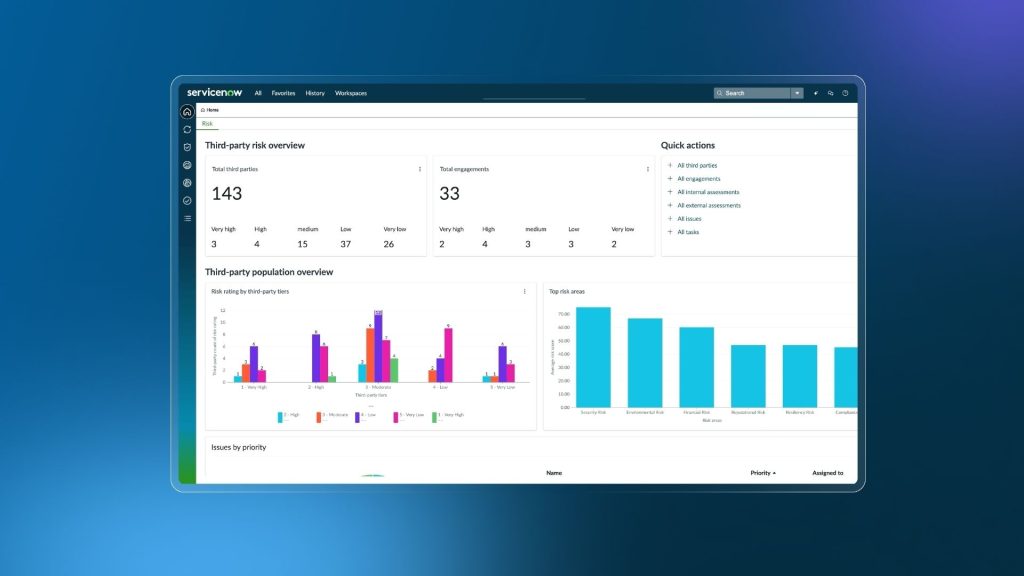
ServiceNow is also extending automation into governance and regulatory compliance. Through Continuous Control Monitoring, AI agents continuously assess control effectiveness, monitor access rights, validate segregation of duties, and generate compliance-ready reports across major frameworks such as SOC 2, ISO 27001, PCI-DSS, and HIPAA. In addition, the company introduced Cryptographic Asset Compliance, helping organizations identify and transition from legacy encryption standards to quantum-resistant alternatives.
The platform is strengthened by technologies integrated from Armis and Veza, providing continuous visibility across connected assets and comprehensive mapping of permissions and identity relationships. Combined with ServiceNow’s AI Control Tower and Context Engine, these capabilities enable organizations to automate security decisions while maintaining governance, accountability, and auditability.
As AI becomes deeply embedded within enterprise operations, ServiceNow believes cybersecurity must evolve beyond traditional detection and response approaches. By combining AI-driven automation, identity governance, exposure management, and continuous compliance into a unified architecture, the company aims to help enterprises defend against increasingly sophisticated threats while accelerating digital transformation initiatives.
With cyber risks expanding alongside AI adoption, ServiceNow’s Autonomous Security platform reflects a broader industry shift toward autonomous, prevention-first security operations capable of keeping pace with the speed and scale of modern business.
