

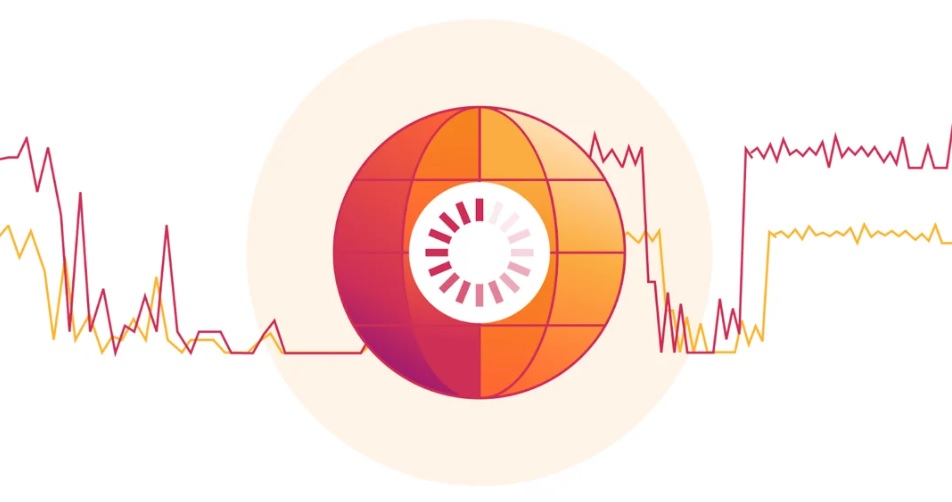
Cloudflare has released its Q2 2026 Internet Disruptions Report, revealing how geopolitical conflicts, government-imposed Internet shutdowns, infrastructure failures and natural disasters significantly impacted global connectivity during the second quarter of the year. Based on insights from Cloudflare Radar, the report highlights the Middle East and Africa (MEA) as one of the regions most affected by prolonged Internet disruptions.
Among the report’s key findings was the restoration of Internet connectivity in Iran after an 88-day nationwide blackout that began in February. According to Cloudflare Radar, Internet traffic gradually returned from May 26 and eventually stabilized at nearly 59% of pre-shutdown levels, marking one of the most significant connectivity recoveries during the quarter.
The report also noted that exam-related Internet shutdowns remain a recurring challenge across the region. Sudan implemented ten scheduled shutdowns during national examinations, while Iraq imposed three similar disruptions in June, underscoring the continued use of connectivity restrictions by governments.
“The Internet’s resilience depends as much on stable infrastructure and sound policy as on technology itself. Our latest findings show how conflict, outages and government actions continue to shape digital connectivity worldwide.”
Regional conflict also continued to affect cloud infrastructure. HTTP traffic to AWS’s me-central-1 region in the UAE remained significantly below normal following physical damage to data centre infrastructure caused by drone strikes, impacting applications and digital services hosted in the region.
Beyond MEA, Cloudflare Radar recorded major Internet disruptions caused by Super Typhoon Sinlaku near Guam, earthquakes in Venezuela, a nationwide power outage in Tanzania, a submarine cable cut in Saint Lucia, and a DNSSEC configuration error that temporarily disrupted access to Germany’s .de domains.
The report concludes that Internet resilience increasingly depends on the reliability of interconnected infrastructure, including power grids, submarine cables, cloud platforms and routing systems. As governments, enterprises and service providers become more dependent on digital connectivity, strengthening network resilience has become a strategic priority.
Cloudflare said it will continue to monitor global Internet health through Cloudflare Radar and its Outage Center, providing real-time visibility into connectivity trends and disruptions worldwide.
