

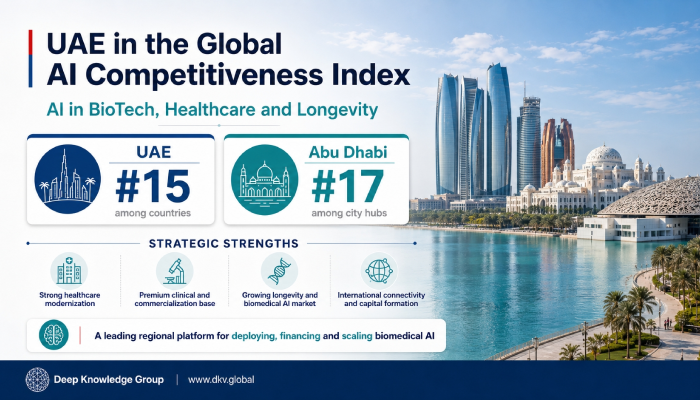
Global AI Competitiveness Index places the UAE ahead of India, Australia, Spain, Belgium, and Finland, with Abu Dhabi and Dubai emerging among the world’s leading AI healthcare hubs
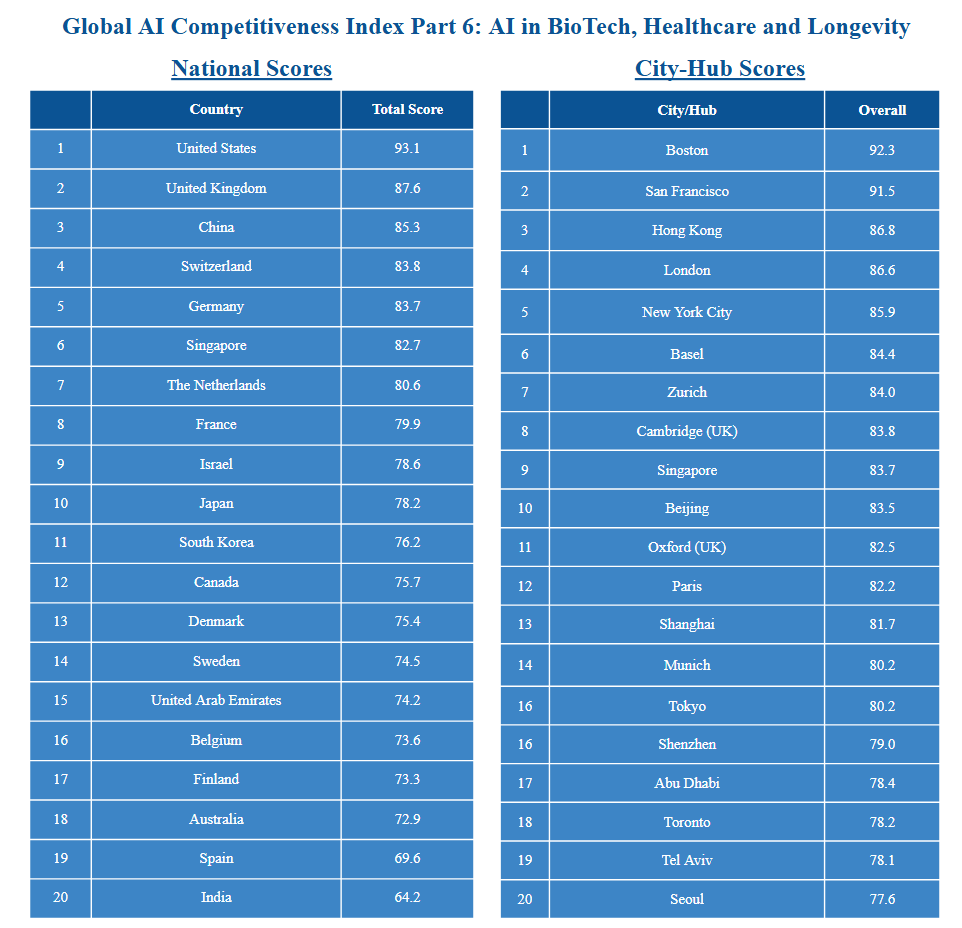
The United Arab Emirates has secured the 15th position globally in AI for biotech, healthcare, and longevity, according to the latest Global AI Competitiveness Index released by Deep Knowledge Group. The ranking places the UAE ahead of countries including India, Australia, Spain, Belgium, and Finland.
The report, titled Global AI Competitiveness Index Part 6: Analyzing AI from a BioTech, Healthcare and Longevity Perspective, evaluated more than 8,000 companies, 4,200 investors, and 240 global hubs contributing to AI-driven healthcare and biotech innovation.
Abu Dhabi ranked 17th globally among city hubs, outperforming established innovation ecosystems such as Toronto and Seoul. The report credited Abu Dhabi’s position to its rapid healthcare digitization, AI-enabled clinical services, preventive healthcare innovation, and strategic investments in genomics and precision medicine.
“The future of AI leadership will depend less on isolated research excellence and more on the ability to operationalize innovation across healthcare systems, governance frameworks, and capital markets an area where the UAE is progressing remarkably fast,” said Dr. Patrick Glauner, Professor of Artificial Intelligence at Deggendorf Institute of Technology and co-author of the report.
According to the Index, organizations such as M42 and Malaffi have played a central role in strengthening the emirate’s AI healthcare ecosystem by enabling connected care and data-driven healthcare delivery.
Dubai was also highlighted for its contribution to the UAE’s overall competitiveness through initiatives including Dubai Healthcare City, Mohammed Bin Rashid University of Medicine and Health Sciences, and NABIDH, Dubai’s health information exchange platform. The report noted that Dubai’s commercially active healthcare ecosystem is supporting AI-enabled healthcare services, medical tourism, preventive care, and digital health innovation.
The study emphasized that future leadership in biomedical AI will increasingly depend on deployment readiness rather than research strength alone. Factors such as healthcare digitization, governed data access, regulatory readiness, clinical validation, and capital formation were identified as critical drivers of competitiveness.
The report also described the Middle East as one of the fastest-growing regions for AI in healthcare and biotech, driven by strong government support and strategic investments, while noting that interoperability and data-sharing challenges remain key hurdles for the broader region.
