

Research reveals that AI-driven and autonomous systems account for 25% of insider incidents, while 94% of CISOs report growing responsibility for managing insider risk.
Organisations across the Middle East are facing a costly shift in cybersecurity risk as insider-related incidents increasingly involve not only employees and trusted users but also AI-driven and autonomous systems. According to new research commissioned by Trellix, affected organisations in the region incurred an average of US$2.41 million in costs from insider-related security incidents over the past 12 months.
The findings, published in Trellix’s Mind of the CISO: The New Insider research, point to a growing challenge for security leaders: trusted access, once associated primarily with employees, contractors and privileged users, now extends to AI tools and autonomous systems capable of taking actions at machine speed.
The consequences are significant. Among Middle East organisations that experienced an insider-related incident, 55% reported data loss or exposure of sensitive information, 41% experienced operational disruption or downtime, and 47% suffered reputational damage or a loss of customer trust. These impacts illustrate how an incident originating within an organisation’s trusted environment can quickly extend beyond the security function, affecting business continuity, customer relationships and financial performance.
The findings come as enterprises across the Gulf expand their use of artificial intelligence in business operations, software development, customer service and security operations. As AI systems gain access to corporate applications, sensitive data and operational workflows, the traditional boundaries of insider risk are becoming more difficult to define and manage.
AI systems emerge as a new insider-risk category
Trellix’s research identifies three principal sources of insider-related incidents: accidental or negligent human actions, malicious human activity, and actions taken by AI-driven or autonomous systems.
On average, accidental or negligent actions by employees and other trusted users accounted for 45% of insider incidents, while malicious human actions accounted for 30%. AI-driven or autonomous systems accounted for the remaining 25%—one in four incidents, according to the findings.
“CISOs need the ability to track activity across both human and AI actors, understand the full picture, and shut down a threat before it becomes a wider business problem.”
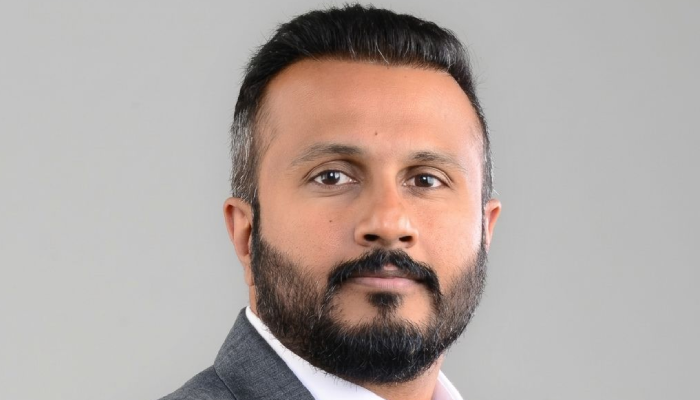
— Siju Ramachandradasan, Vice President, Customer Success & Professional Services – EMEA, Trellix
The emergence of AI as a significant contributor changes the nature of insider risk. Human insiders may make mistakes, misuse access or deliberately expose information, but autonomous systems can execute tasks continuously and potentially repeat an error across multiple processes before it is detected.
An AI agent operating with access to enterprise applications, databases or business workflows may be able to retrieve information, initiate actions or interact with other systems without a person reviewing every step. If its permissions are excessive, its instructions are manipulated or its behaviour deviates from expectations, the consequences can extend quickly across the organisation.
The risk is not necessarily that an AI system acts maliciously in the human sense. It may instead follow flawed instructions, misinterpret a request, access information beyond its intended scope or carry out an action that produces an unintended business outcome. From a security perspective, however, the resulting exposure may be comparable to that caused by a compromised account or an employee making an unauthorised disclosure.
For organisations, this means AI systems must be treated as active participants in the enterprise security environment rather than simply as software tools. Their identities, permissions, actions and access to sensitive information need to be governed throughout their lifecycle.
“When AI agents operate inside your trusted boundary at machine speed, the resilient organisations will be the ones governing them like the privileged identities they are, while simultaneously building an agentic SOC to respond at the speed of the threat, not a human workflow,” said David Soto, Chief Information Security Officer at Trellix.
Soto’s observation highlights two interconnected requirements: tighter control over AI identities and the ability to investigate and respond to suspicious activity at a speed appropriate to automated systems.
“When AI agents operate inside your trusted boundary at machine speed, organisations must govern them like the privileged identities they are.” — David Soto, Chief Information Security Officer, Trellix
CISOs face greater accountability but limited visibility
The expanding risk landscape is placing additional pressure on chief information security officers. In the Middle East, 94% of CISOs surveyed said their responsibility for managing insider risk had increased over the previous 12 months. Meanwhile, 70% expressed concern about their personal liability if an insider-related security incident occurred.
Yet responsibility is not always matched by organisational understanding or adequate controls. The study found that 83% of respondents said senior leaders or board members lacked a clear understanding of insider risk and its potential impact.
This disconnect presents a governance challenge. Security leaders are increasingly expected to account for actions performed by employees, third parties and AI systems, while also explaining the financial, operational and regulatory implications of failures to business leaders.
Insider risk can be particularly difficult to communicate because legitimate access is often necessary for business operations. Employees need access to information to perform their roles, service providers require permissions to maintain systems, and AI agents may need to interact with enterprise data to complete assigned tasks. Simply restricting access indiscriminately can undermine productivity without necessarily eliminating the underlying risk.
The challenge is to establish appropriate boundaries: determining which identities can access specific resources, what actions they are permitted to perform, and how those actions are monitored. These controls become more important as AI agents operate across interconnected applications and business processes.
The research also points to shortcomings in AI oversight. Some 78% of Middle East respondents agreed that their organisations lacked sufficient visibility into how employees used AI tools, while 76% said their organisations were not fully prepared to manage the risks associated with AI and autonomous tools.
Without adequate visibility, security teams may struggle to distinguish legitimate AI-assisted work from suspicious activity, identify sensitive information being shared with unauthorised tools, or establish which system or identity initiated a particular action.
Organisations therefore need to understand not only whether AI is being used, but also where it is deployed, which data it can access, what permissions it holds and how its activity can be traced. Establishing clear ownership for non-human identities, applying least-privilege access and maintaining auditable records of AI actions can help close these gaps.
Detection and response remain critical weaknesses
Even when suspicious activity is visible, the speed of response remains a concern. According to Trellix, Middle East organisations take an average of 5.6 hours to detect an insider-related incident and a further 8.2 hours to respond. The combined interval approaches 14 hours between the occurrence of an incident and the completion of the response process, although the reported averages do not establish that every incident follows the same timeline.
For conventional security operations, this delay can leave sensitive information exposed or business systems vulnerable while investigators establish what happened, determine the scope of the incident and decide on containment measures.
For AI-driven activity, the problem is compounded by the speed and scale at which automated processes can operate. An AI agent may perform multiple actions in the time it takes a human analyst to examine an alert. If the system has access to several applications or interconnected services, an error or compromised identity could potentially affect multiple resources before intervention.
Reducing response times requires more than generating additional alerts. Security operations centres need contextual information that connects identities, devices, applications, data access and system behaviour. Analysts must be able to determine whether an action is expected, identify the systems and information affected, and contain suspicious activity without unnecessarily disrupting legitimate business operations.
Automation can assist by correlating signals, prioritising investigations and accelerating routine response steps. However, automated containment must also be governed carefully, particularly where actions could interrupt critical services or affect sensitive business processes.
Siju Ramachandradasan, Vice President, Customer Success & Professional Services – EMEA at Trellix, said the focus for security leaders in the region had shifted from whether AI belonged in the security operations centre to how its activities could be controlled.
“Organisations here are operating in complex regulatory environments with real consequences for getting it wrong,” Ramachandradasan said. He stressed the need for CISOs to track activity across both human and AI actors, understand the wider context and shut down threats before they develop into larger business problems.
For Middle East enterprises, that requirement is particularly relevant as digital transformation initiatives expand across regulated and critical sectors. Security teams must be able to demonstrate who or what accessed information, why an action was taken and whether it complied with organisational policy.
The case for an agentic security operations centre
Trellix is positioning its agentic security operations centre, or SOC, approach as one response to the growing gap between threat activity and human-led investigation. The company recently introduced Trellix Wise for Private Cloud, described as the AI core for an agentic SOC deployed within a customer’s own environment.
The offering is designed to accelerate threat investigation and response while keeping security data under the organisation’s control. A private-cloud deployment may be relevant to organisations that need to retain control over sensitive security telemetry and investigative information, although deployment alone does not remove the need for appropriate governance, access controls and oversight.
An agentic SOC approach seeks to use AI to support or coordinate security workflows, helping teams investigate alerts, connect related events and execute approved response actions more efficiently. The potential value lies in reducing repetitive manual work and allowing analysts to concentrate on incidents that require deeper investigation or human judgement.
For insider risk, this could mean correlating a suspicious data transfer with the identity responsible, the application involved, the permissions granted and any related activity by an AI agent. Such context can help security teams distinguish routine activity from a potential breach and determine an appropriate response.
However, deploying AI within security operations introduces its own governance considerations. Organisations need to define which actions an AI system can take independently, which require human approval, and how decisions and actions are recorded. The same principle that applies to enterprise AI agents applies to security agents: greater autonomy must be accompanied by appropriate permissions, monitoring and accountability.
From insider awareness to measurable control
Trellix commissioned independent research agency Vanson Bourne to survey 600 CISOs or equivalent senior security leaders across the Americas, Europe, the Middle East and Asia-Pacific during August and September 2026. The Middle East sample consisted of 80 respondents—40 in the UAE and 40 in Saudi Arabia. The US$2.41 million cost average was calculated from respondents whose organisations experienced an insider-related incident in the previous 12 months and provided a cost estimate.
While the regional findings should be understood within the limits of the survey sample, they underline a strategic issue for enterprise security: insider risk is no longer confined to employee behaviour. It increasingly encompasses the identities, permissions and actions of autonomous systems operating within trusted environments.
For CISOs, the response needs to extend beyond traditional awareness training and employee monitoring. Organisations must establish an inventory of human and non-human identities, limit access according to business need, improve visibility into AI usage, and maintain evidence of activity across systems. They must also ensure that incident response procedures account for AI-generated or AI-executed actions.
Board-level engagement is equally important. Senior leadership needs to understand the potential cost of insider incidents, the business consequences of inadequate oversight and the resources required to manage the risk. Without clear ownership across security, IT, data governance and business teams, responsibility can become fragmented precisely when rapid decisions are required.
The central message from the research is that trust cannot be treated as a permanent exemption from security controls. Employees, service accounts and AI agents may all require legitimate access, but that access must remain visible, limited and accountable.
As organisations introduce more autonomous systems into business operations, the ability to govern their behaviour and respond quickly when something goes wrong will become a defining measure of cyber resilience. The objective is not to prevent AI adoption, but to ensure that its speed and scale do not outpace the organisation’s ability to control risk.
