

As AI, cloud and digital transformation accelerate across the region, Middle East enterprises are discovering that innovation without resilience can create a new generation of technology risks.
The Middle East is entering a defining phase of its digital transformation journey. Governments are pursuing ambitious AI strategies, enterprises are modernizing infrastructure, financial institutions are embracing intelligent automation, and industries ranging from energy and healthcare to retail and aviation are increasingly dependent on data-driven operations.
But beneath this rapid transformation lies a more fundamental challenge: can organizations build digital resilience at the same speed at which they are adopting new technologies?
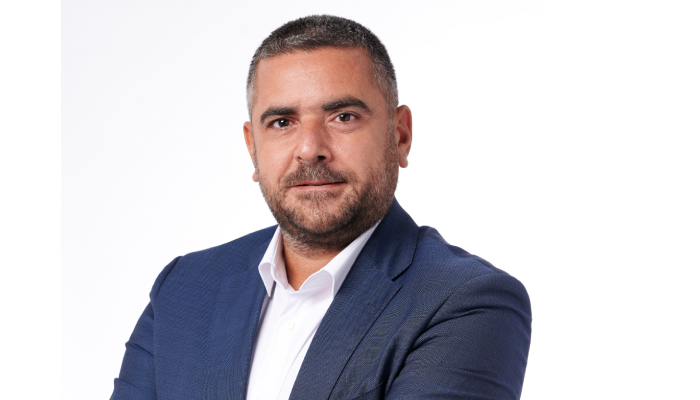
According to Toni Azzi, Vice President – Qatar & Levant at Mindware, technology adoption itself is no longer the primary challenge. The real test is ensuring that the underlying digital architecture is secure, compliant, scalable and resilient enough to support an increasingly AI-driven enterprise.
“AI models need trusted data, cloud platforms need governance, cybersecurity needs continuous visibility, and datacenter and compute environments must be ready for high-performance, latency-sensitive workloads,” says Azzi.
This shift in priorities is significant. Organizations can no longer approach AI, cloud, cybersecurity, data, infrastructure and modernization as independent technology projects. They increasingly need to view them as interconnected elements of a resilient digital operating model.
AI: From Business Opportunity to Governance Challenge
AI has undoubtedly emerged as one of the biggest business enablers in the region. Governments are using it to improve public services, energy companies are applying predictive analytics to operations, financial institutions are deploying AI for fraud detection, and retailers are using intelligent systems to personalize customer experiences.
However, the same technology introduces new risks.
Data leakage, model misuse, intellectual property exposure, hallucinations, shadow AI, deepfakes and AI-enabled cyberattacks are creating new concerns for CIOs and CISOs.
Azzi believes AI must therefore be approached with governance and security built into the deployment process.
“AI is unquestionably a business enabler, but only when it is deployed with the right governance, infrastructure, data protection, and security controls,” he says.
For enterprises, this means moving beyond AI experimentation toward structured AI execution. Organizations need to identify high-value use cases, understand the data required, assess risks and determine the infrastructure needed to deploy AI at scale.
This is also where the broader technology ecosystem becomes important. Mindware’s portfolio spans AI, cloud, cybersecurity, datacenter, compute, infrastructure, data solutions and modern workplace technologies. Its MAGIC platform—Mindware’s Aggregation Gateway for Innovation and Collaboration—is designed to bring technical expertise, advisory support, solution design, training, financing, legal alignment and partner collaboration into the transformation process.
The objective is to reduce the complexity associated with bringing multiple technologies together and turn individual products into integrated business solutions.
The CIO and CISO Agenda Is Converging
For technology and security leaders, the traditional boundaries between IT priorities are rapidly disappearing.
Cybersecurity, compliance, talent and AI governance are no longer independent boardroom conversations. They increasingly influence one another.
“CIOs and CISOs are losing sleep over the convergence of all four,” Azzi says.
The challenge is particularly pronounced in the Middle East, where organizations must balance rapid innovation with regulatory requirements, data sovereignty, cyber resilience and the availability of specialized skills.
AI governance without cybersecurity is incomplete. Cybersecurity without skilled professionals is difficult to sustain. Compliance without appropriate cloud and data architecture can become fragile. And innovation without resilience can create systemic risk.
The emerging requirement is therefore a unified operating model in which innovation and risk management are designed together.
AI-Powered Cyberattacks Raise the Stakes
The cybersecurity threat landscape is also changing as attackers gain access to increasingly sophisticated AI capabilities.
AI-powered phishing, deepfake-enabled fraud, automated reconnaissance and prompt-based attacks can potentially make traditional security defenses less effective. Organizations that continue relying heavily on fragmented tools and manual processes could find themselves increasingly exposed.
Azzi believes the region needs to transition from traditional cybersecurity toward AI-era cyber resilience.
That means strengthening identity protection, data security, endpoint security, cloud posture management, backup and recovery, security operations and compliance visibility.
Preparedness, however, remains uneven.
Leading organizations in government, financial services, energy, telecommunications and critical infrastructure are investing significantly in threat intelligence, identity security, cloud protection and AI-enabled detection. But smaller and less mature organizations can struggle to integrate security across increasingly complex digital environments.
The challenge is not simply buying more security products. It is creating a layered and integrated defense architecture that can evolve as threats evolve.
Don’t Let Innovation Outrun Resilience
The pressure to deploy AI, migrate to cloud, modernize applications and improve digital customer experiences is intense. But organizations can create vulnerabilities when technology initiatives move faster than architecture, governance and security.
“The better approach is not to slow innovation, but to engineer resilience into innovation from the beginning,” Azzi explains.
That principle could become one of the most important technology strategies for enterprises over the next few years.
AI needs to be governed from the design stage. Cloud architectures need to incorporate sovereignty and compliance requirements. Datacenter and compute investments must reflect workload and performance requirements. Cybersecurity must extend across the entire digital stack.
The goal is not to create additional layers of bureaucracy around innovation. Instead, resilience should become part of the architecture itself.
Data Sovereignty Becomes Strategic
Data sovereignty is rapidly becoming one of the defining considerations for Middle East IT strategies.
Data is increasingly viewed not simply as an enterprise asset but as an economic, national and security asset. Governments and regulated organizations want greater clarity over where information resides, who can access it and how it is processed.
This is reshaping cloud strategies.
Organizations are increasingly evaluating hybrid and multicloud environments, localized data controls, stronger encryption, auditable operations and workload classification.
Sovereign cloud is therefore not simply about keeping data within a geographic boundary. It is about creating trusted digital platforms where organizations can control data, applications and workloads according to regulatory and business requirements.
“Customers are not simply asking for cloud capacity; they are asking for trusted digital platforms that support AI, analytics, compliance, and resilience,” says Azzi.
For the Middle East, this trend is likely to intensify as national digital agendas and AI strategies mature.
“The single biggest challenge is no longer technology adoption; it is building digital resilience at the same speed as digital transformation.”
— Toni Azzi, Vice President – Qatar & Levant, Mindware
The Cross-Functional Talent Gap
Technology infrastructure may be evolving rapidly, but people remain a critical constraint.
The most urgent skills gap is no longer limited to a particular technology. Organizations increasingly need professionals who can connect AI, cloud, cybersecurity, data governance and business outcomes.
Many enterprises have specialists in individual domains, but fewer professionals can design secure AI workloads, manage hybrid cloud environments, understand regulatory requirements and translate technology investments into measurable business value.
This creates an ecosystem opportunity.
Partner training, technical enablement, pre-sales expertise and professional services can help bridge some of these gaps. Mindware’s MAGIC platform is designed to extend such enablement across technical, sales, marketing, financial, legal and strategic areas.
For technology vendors, this can strengthen channel capabilities. For systems integrators, it can improve delivery confidence. For ISVs, it can provide pathways to scale solutions into new markets.
Government and Financial Services Lead
Across the region, government and financial services are among the strongest digital transformation leaders.
Government organizations are driving national digital strategies, smart-city initiatives, AI programs, cloud modernization and digital public services. Financial institutions are investing heavily in cloud, cybersecurity, fraud analytics, customer experience and compliance modernization.
Energy, telecommunications and aviation are also advancing quickly, particularly where AI, IoT, automation and high-performance computing can generate measurable operational benefits.
Other sectors face different challenges. Traditional manufacturing, parts of the education and healthcare sectors, and some mid-market organizations can struggle with legacy infrastructure, fragmented budgets, skills shortages or the absence of clear digital roadmaps.
For these organizations, reducing technology complexity and providing practical, outcome-focused solutions becomes particularly important.
The Biggest Investment Mistake
One of the most common mistakes enterprises make is treating AI, cloud and cybersecurity as separate procurement decisions.
An organization might acquire an AI platform without preparing its data. Another might migrate workloads to the cloud without establishing appropriate governance. A third might purchase cybersecurity tools without integrating them into a mature security operating model.
The result can be more technology but not necessarily greater resilience.
“The biggest mistake is treating AI, cloud, and cybersecurity as separate procurement decisions rather than as parts of one digital operating model,” Azzi says.
The better approach begins with the desired business outcome. From there, organizations can define the architecture, governance, skills and lifecycle support required to achieve it.
Building the Resilient Digital Core
Azzi’s recommendation for Middle East CIOs and CISOs over the next three years is to focus on building a resilient digital core that is AI-ready, cloud-enabled, cyber-secure, data-governed and sovereignty-aware.
The organizations that succeed will not necessarily be those that deploy the greatest number of technologies. They will be those that establish the strongest foundations for trusted innovation.
That requires CIOs and CISOs to work together on a roadmap that connects AI strategy, cloud architecture, cybersecurity, datacenter modernization, compliance, talent development and ecosystem partnerships.
For technology distributors and channel partners, this changing environment creates a broader role. The opportunity is no longer simply to move products through the channel. It is to help organizations connect technologies, skills and services into complete transformation journeys.
The Middle East’s digital transformation story is therefore entering its next chapter. The focus is shifting from adoption to resilience, from experimentation to execution, and from individual technologies to integrated digital ecosystems.
AI will remain one of the region’s most powerful engines of innovation. But its long-term value will depend on whether organizations can build the secure, sovereign, scalable and resilient foundations needed to trust it.
