

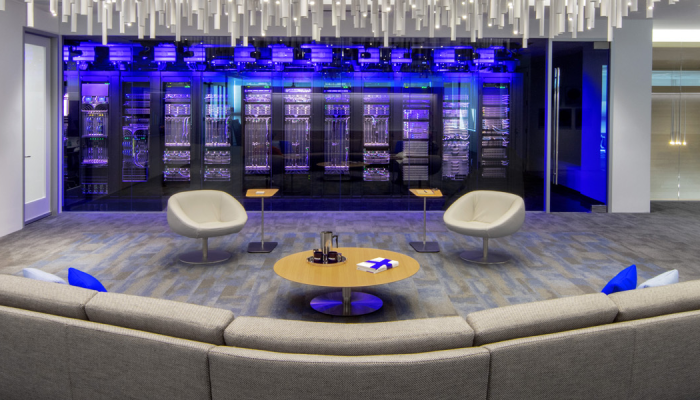
Nokia has announced the launch of its AI Networking Innovation Lab, a new initiative aimed at accelerating the development of next-generation networking technologies designed specifically for artificial intelligence (AI) workloads. Located at Nokia’s facility in Sunnyvale, California, the lab will serve as a global co-innovation hub for advancing AI-native data center networking.
The lab is designed to address the growing complexity of AI infrastructure, as enterprises and hyperscalers increasingly deploy large-scale AI training models and real-time inference systems. These workloads demand high-performance, low-latency, and highly scalable networking capabilities, pushing traditional data center architectures to their limits.
Through the new facility, Nokia plans to collaborate with a broad ecosystem of technology partners including AMD, Keysight, Lenovo, Supermicro, Weka, and Nscale to design, test, and validate next-generation networking solutions. The lab will also serve as a proving ground for Nokia Validated Designs (NVDs), enabling organizations to test real-world deployment scenarios and reduce integration risks.
“The launch of Nokia’s AI Networking Innovation Lab marks a major milestone in our commitment to drive the next era of AI-native connectivity.” Rudy Hoebeke, Vice President of Software Product Management at Nokia.
The AI Networking Innovation Lab is built on three key pillars: technology innovation, ecosystem collaboration, and validation. It brings together advanced networking protocols, cutting-edge switching silicon, and new architectural frameworks specifically engineered for AI-driven environments. These capabilities will allow partners to experiment across the full networking stack, including congestion control, telemetry, and automation.
Industry partners have already highlighted the importance of the initiative. Keysight noted that the collaboration enables real-world benchmarking of AI workloads at scale, while AMD emphasized the role of open ecosystems in accelerating innovation and avoiding vendor lock-in.
Validation is another critical focus area, with the lab enabling rigorous testing of multi-vendor environments under realistic AI workloads. This includes analyzing failure scenarios, optimizing performance, and ensuring operational reliability key requirements for enterprises investing in AI infrastructure.
The launch of the lab is part of Nokia’s broader strategy to strengthen its position in AI and cloud networking. As demand for AI capabilities grows globally, the company aims to provide the foundational infrastructure needed to support scalable, efficient, and reliable AI deployments.
With this initiative, Nokia is positioning itself at the forefront of AI-driven connectivity, helping enterprises and service providers navigate the next phase of digital transformation.
