

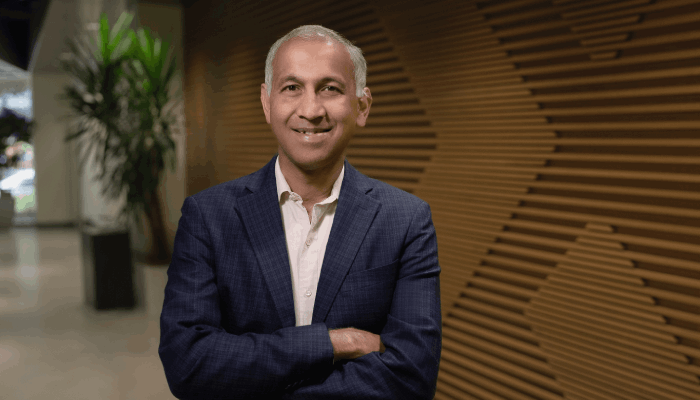
From hyperconvergence to multi‑cloud and AI, Nutanix’s journey reflects a global shift toward autonomy, modernization, and secure innovation across every industry and nation.
The room was still settling when Rajiv Ramaswami, CEO of Nutanix, opened with a line that sounded less like a boast and more like a calibration: “We’re sixteen years old sixteen years young, really.” The point wasn’t nostalgia. It was context for a company that began life simplifying on‑prem infrastructure and now finds itself straddling multi‑cloud, modern applications and an AI‑driven future, while navigating a world newly defined by sovereignty, compliance, and shifting alliances.
From Hyperconvergence to a Full Platform
Nutanix’s origin story is known across enterprise IT: hyperconverged infrastructure (HCI) that collapsed compute, storage, and networking into a software platform that radically simplified deployment and operations. That early value proposition, Ramaswami noted, “still pays a lot of our bills today.”
But the company has already completed a quiet transformation. “We’ve expanded into a full multi‑cloud software platform,” he said, carefully enumerating what that now includes: compute, storage, networking, operations, orchestration and security—engineered for both virtualized and cloud‑native applications. Even the storage stance, once a doctrinal pillar of HCI, has grown pragmatic. “Storage used to be only HCI,” he said. “Now we support external storage as well—Dell PowerFlex, Pure Storage, and we’ve announced support for Dell PowerStore. It’s all about flexibility and choice. If customers have three‑tier storage, we meet them where they are.”
That pragmatism extends across clouds. After building on AWS, then Azure, Nutanix most recently added Google Cloud support an important signal for enterprises that want workload mobility without lock‑in and for governments prioritizing sovereignty.
“Every modern application will be containerized, orchestrated on Kubernetes, and infused with AI. Our job is to make that simple and secure.”
Rajiv Ramaswami, CEO of Nutanix
The New Center of Gravity: Kubernetes and AI
Fast forward to customer reality, and the center of gravity is shifting. “We live in a multi‑cloud, virtualized world,” Ramaswami said. “But we’re moving to one that’s cloud‑native and AI‑driven.” Modern applications are containerized and orchestrated by Kubernetes; generative AI is being infused into those applications—and nearly all of that AI, he emphasized, “will be containerized and continue to run on Kubernetes.”
To that end, Nutanix has shipped the Nutanix Kubernetes Platform and Nutanix AI unadorned names that reflect a deliberate plain‑spoken design philosophy. The aim isn’t to win buzzword bingo; it’s to make AI infrastructure turnkey. “We want a developer or user to consume tokens securely at predictable cost without worrying about what’s under the covers,” he said. Rack a server with GPUs, lay down Nutanix’s software stack compute, storage, network, and the AI layer and start inferencing. Simple in description, and increasingly simple in experience.
The Business by the Numbers
Behind the product story is a business still accelerating. Nutanix expects $2.9 billion in revenue in the fiscal year ending July, with a customer base approaching 30,000 worldwide. Roughly half of the Global 2000 now run on Nutanix, and the company continues to add 600–700 customers per quarter. Annual recurring revenue grew 18% last quarter.
The growth drivers are familiar and newly urgent: infrastructure modernization, hybrid multi‑cloud adoption, and an unmistakable pull from customers considering alternatives to VMware following its acquisition by Broadcom. For those customers, Ramaswami said flatly, “Nutanix offers the easiest option.” The pitch: migrate from VMware to Nutanix without refactoring the application “automated migrations, no changes to the app” and gain flexibility that extends from on‑prem to sovereign and public clouds.
Culture as a Competitive System
If the technology is what Nutanix sells, culture is how it executes. Ramaswami boiled it down to four principles all employees are expected to live:
- Customer obsession. “Every function, every employee wakes up asking, ‘What can I do to make things better for the customer?’” The evidence: a Net Promoter Score of 90 sustained for a decade—an outlier at enterprise scale. It shows up everywhere, from UX (“Can we do it in one click?”) to support (no L1 tiers; calls go straight to engineers who know the account).
- Think long term. Nutanix invests roughly 25% of revenue in R\&D, builds durable relationships (including with government agencies globally), and avoids transactional postures.
- One team. Cross‑functional alignment, shared outcomes.
- Distributed ownership. Empower people closest to the customer to act.
Over time, he said, “customers become our best sellers.” It sounds like a motto; it reads like a strategy.
Sovereignty Isn’t a Slogan
Much of Ramaswami’s recent travel had been in the Middle East—Dubai, Abu Dhabi, Saudi Arabia where the themes of sovereignty and nation‑scale digitization are not abstract policy but operational imperatives. “Every country wants to define its own future,” he said. In technology terms, sovereignty translates to three things:
- Localization. Models and applications must be tuned to local languages and verticals Arabic, Japanese, pharma, defense, government and sensitive to domain‑specific needs and regulations.
- Self‑reliance. The ability to own and operate your own cloud often using open source as a foundation. Nutanix builds on open technologies and hardens them for mission‑critical use: its hypervisor is KVM‑based; its Kubernetes distribution is fully open-source compatible; its platform layers consistently add reliability, security, and manageability.
- Data sovereignty. Data must be stored, classified, and protected locally. Nutanix enables the entire spectrum from public clouds to air‑gapped data centers where workloads are completely isolated. “Everything we offer as SaaS is also available as an on‑prem, air‑gapped version,” he said, citing cluster management, security, and lifecycle management—all operable in environments disconnected from the public internet.
This is more than positioning. In the region, Nutanix works with government cloud providers and customers across telco, media, pharma, and healthcare—verticals where sovereignty, privacy, and reliability are not optional.
Compliance Lives in the Infrastructure
When asked how to reconcile layers of regulation across municipalities and ministries Abu Dhabi’s rules, Dubai’s rules, GCC dynamics Ramaswami brought it back to where policy meets systems: the infrastructure. “Ironically, a lot of compliance falls on infrastructure,” he said. Segmentation, isolation, data protection, and operator visibility all of these are implemented and audited at the platform layer. Nutanix’s approach allows operators to map policies to controls: this data is never exposed; this model is trained only in this zone; this workload cannot invoke public services.
That matters especially in AI, where many countries will consume models rather than build them from scratch. Nutanix supports a secure model‑use pattern: connect to repositories, download an open‑source model (e.g., Llama), run it inside a secure, isolated environment, never sync back. Fine‑tune or augment with retrieval‑augmented generation (RAG), use it for inferencing, and keep the IP local. The “kill switch,” in this framing, is structural: the model never leaves the secure boundary; access controls define who can touch it and what data it sees.
The Messy Middle: Data, Accuracy, and the Edge
Enterprises today are drowning in data and hungry for signal. On the question of “clean” data for AI, Ramaswami presented two complementary tracks. One is structured curation—decide what matters, run it through cleansing tools, and deliberately select the subset that will train or inform your models. The other is AI‑assisted distillation using search and summarization tools to classify and compress vast unstructured corpora into workable knowledge.
What about latency and the edge? “Latency isn’t the issue if you run AI where your data is,” he said. Manufacturing lines, oil rigs, hospitals, branches these are edge environments that generate torrents of data and often have strict privacy needs. Sending all of it to the cloud is expensive and often impermissible; inferencing at the edge is both practical and sovereign. Accuracy, of course, is always in scope. The answer isn’t always a giant model. “Not everything needs to be a large language model,” he said. Tailor the model size and training to the use case; measure accuracy; keep humans in the loop where stakes are high.
Hybrid Is the Default, Repatriation Is a Choice
On the larger question of cloud economics and the visible trend of workload repatriation, Ramaswami’s position is steady: the word is hybrid. Startups racing to market should use the public cloud. But as companies scale and run large, steady‑state workloads, dedicated infrastructure owned or collocated can be dramatically cheaper and more controllable. Decisions will hinge on cost, privacy, security, sovereignty, and time‑to‑value. The platform’s job is to make those decisions reversible. “If you do it on our platform properly, you have portability,” he said. “Move the app and its data, when you need to.”
Early AI, Real ROI
Despite the headlines, enterprise AI is still early on the inference side the part that matters to Nutanix. Many customers are deploying small clusters to pilot and then productionize targeted use cases with tangible ROI: customer support assistants, document summarization, software development acceleration. “A lot of these don’t require massive capacity,” Ramaswami said. Internally, Nutanix runs open‑source models for support search and summarization on four‑node clusters organizationally meaningful results on modest infrastructure.
The next wave multi‑agent systems is taking shape. One customer wants to automate an end‑to‑end ERP flow with AI agents. “Aspirational,” he called it, but plausible. He envisions agents quietly transforming business intelligence and analytics query the data lake using natural language, generate and iterate dashboards automatically, and let humans validate and steer. The pattern is clear: more use cases, more inferencing, more distributed capacity.
Talent, Simplicity, and the iPhone Metaphor
Sovereign ambitions demand sovereign skills. Nutanix pairs its platform push with education and certification programs in the region training teams to run modern cloud infrastructure and to build AI capabilities on top of it. But Ramaswami is quick to add that technology also has a responsibility: make the complex simple. He invokes the iPhone: you don’t call customer support to upgrade it; migrations are automated; the experience is intuitive. “Enterprise isn’t the iPhone,” he concedes, “but we try to make it as close as possible.” Upskill people while reducing the cognitive load of the platform. Bridge both sides of the gap.
Interview
With Broadcom’s acquisition of VMware, many customers are shifting to Nutanix. Since TCO and ROI are major concerns, what specific cost advantages do you offer, and how do you measure them?
We actually have detailed TCO and ROI calculators for the various migration paths our customers take. These tools are essential because cost optimization is often the first reason customers consider moving to Nutanix.
But it’s important to note that cost is only one part of the story. Customers are migrating for three major reasons. First, of course, is the immediate TCO and ROI improvement. Second, they want to know whether Broadcom will continue delivering the pace of innovation needed as their business evolves. And third, they’re questioning whether Broadcom will remain a trusted, long‑term partner. These concerns together are driving a significant wave of platform reevaluation.
Coming back to costs, our TCO assessments depend on what the customer is migrating from. Many organizations run VMware on traditional three‑tier infrastructure. When such customers move from a three‑tier setup to Nutanix’s HCI architecture, we typically demonstrate savings of around 40%. The exact numbers vary in other scenarios, but we customize each case.
We even have a dedicated Cloud Economist team that engages with customers one‑on‑one, analyzes their environment, and generates a personalized report. Ultimately, unless the customer sees meaningful savings, they’re not going to make a move—so our ability to quantify value is critical.
You partner with AWS, Azure, and GCP but also compete with their native services. What makes Nutanix’s value proposition stronger in those scenarios?
Great question. Yes, we both partner and compete with these cloud providers. Their priority is simple: they want enterprise workloads running natively on their platforms because that drives consumption.
What Nutanix offers is the fastest way to move existing enterprise applications to the public cloud without any modification—no refactoring, no re‑architecting, no re‑platforming. Customers can simply lift‑and‑shift their applications, and they run on the public cloud with full fidelity. For the hyperscalers, this dramatically reduces onboarding time for enterprise workloads. That’s why they value the partnership.
Let me share a real example. A major global bank in the US had been a Nutanix customer but paused expanding with us when they adopted a cloud‑first strategy about 7–8 years ago. They signed large commitments with both AWS and Azure and began trying to refactor and migrate their applications. Four to five years later, only a tiny fraction had actually moved. They were stuck. They had committed cloud spend, declining data center capacity, and application modernization that was progressing very slowly.
At that point, they revisited Nutanix. Because they already had workloads running on our platform, we demonstrated how they could use our one‑click migration to move applications directly into Azure or AWS—immediately. Even better, they could purchase Nutanix licenses through AWS or Azure marketplaces and apply those against their existing cloud commitments. For them, it was a breakthrough.
In just a few months, they migrated a significant set of workloads into Azure and later began using Nutanix on AWS as well. The customer achieved their goals, the cloud providers saw increased consumption, and we expanded our footprint. It was a win for everyone.
Another example involves a top global technology university. They were longtime users of VMware Cloud on AWS. When they decided to move away from VMware, they migrated directly from VMware on AWS to Nutanix on AWS, using the same bare‑metal instances. The transition took only a few months. Interestingly, they first adopted Nutanix in the public cloud and only later expanded to on‑prem.
How large were these deployments?
I don’t have exact numbers. For the bank, it’s in the thousands. For the university, it’s likely in the hundreds. But those figures are approximate.
Freedom by Design: No Lock‑In
Enterprise buyers have long memories. Lock‑in breeds skepticism. Nutanix designs for freedom of choice: customers can run on VMware’s hypervisor, Nutanix’s own, or bare metal. Use the Nutanix Kubernetes distribution or bring your own. Deploy on‑prem, in sovereign clouds, or on AWS, Azure, or Google Cloud. Choose hardware vendors – Cisco, Dell, HPE, Lenovo, Supermicro and today’s GPUs (NVIDIA) with an eye toward AMD, Google TPUs, and inference chips tomorrow. Licenses are portable across locations. Commercially, customers choose 1‑, 3‑, or 5‑year subscriptions—longer if they want. “We don’t want customers to stay because they’re forced to,” he said. “We want them to stay because they like us.”
Security in a Noisy World
The conversation inevitably turned to “AI hacking,” misinformation, and deepfakes. Nutanix’s role, Ramaswami emphasized, is infrastructure‑level security: governance to know who accessed what, isolation to contain blast radius, policy controls to prevent exfiltration, and detection and protection to spot anomalies. No platform can prevent every deepfake; no control can stop every determined insider. The goal is to raise the cost of misuse, increase visibility, and keep systems resilient. In parallel, he suggested, society will add human protocols verbal “code words” among family members to navigate a world where voices can be cloned in seconds.
Capacity, Consumption, and the Middle East Moment
Everywhere you look, new data centers are rising, and in the Middle East the ambition is tactile. Ramaswami mentioned an 8‑gigawatt solar farm underway outside Dubai. “You can power very big data centers with that,” he said enough to support cities, never mind server rows. Will there be enough consumption to absorb the global build‑out? Eventually, he believes yes, though timing is the question. The capital flows have overwhelmingly gone to training large models; the enterprise inferencing wave is now gathering. The bridge between capacity and consumption will be paved by thousands of targeted, ROI‑positive applications and, over time, agents quietly embedded into every system.
This is why the region excites him. The Middle East, he said, has been one of Nutanix’s fastest‑growing regions over the past five years driven by a desire to diversify economies, modernize technology, and lead rather than follow. “We often see early adoption here faster than in the US,” he said. Some of Nutanix’s most advanced AI deployments are already in the region. Government mandates, sovereign cloud programs, and a bias toward action combine into a momentum that’s hard to miss. The new office is not just symbolic; it’s a commitment.
M\&A, Geopolitics, and Guardrails
On acquisitions, expect tuck‑ins: talent, adjacent technologies, additive capabilities. The core remains organic R\&D. As for geopolitics, the company’s aspiration is global and distributed: R\&D in India and Europe, customers and offices worldwide, and a desire to be a trusted partner independent of national swings. But the macro environment is harder than it was five years ago. Trust must be earned, technically and operationally, not presumed.
What Comes Next
How long did it take Nutanix to reach two‑plus billion in revenue? Sixteen years. How long to the next billion? Ramaswami smiled and deferred specifics to the company’s Investor Day in April. What he would say is that Nutanix’s addressable market is on the order of $100 billion, and the platform now spans both the virtualized present and the cloud‑native, AI‑infused future. “Our platform continues to evolve with time,” he said. “As long as we build the right products and customers adopt them and succeed we’ll continue to grow.”
By the time the questions wound down, the initial calibration sixteen years young felt less like a clever opener and more like a prognosis. The company that simplified the data center is betting it can simplify the modern cloud, make AI consumable, and give customers freedom without friction. The stakes are higher now sovereignty, security, geopolitics but the playbook is familiar: choice, simplicity, and trust. In enterprise software, that’s not just positioning. It’s a promise.
