


AI-native solution aims to cut enterprise CRM deployments from months or years to weeks, while continuously monitoring configurations after go-live.
ServiceNow has introduced Autonomous CRM Engine, an AI-native solution designed to help enterprises move away from complex legacy customer relationship management platforms and deploy ServiceNow CRM in weeks rather than months or years.
Announced on November 16, 2026, the solution addresses a persistent challenge in enterprise technology: CRM modernisation often involves years of accumulated customisations, workflows, integrations and business rules that make migration costly and difficult. Instead of simply transferring existing systems, ServiceNow’s approach is to analyse how organisations use their current CRM, redesign processes and deploy an approved future-state environment.
The need for change is increasingly driven by customer expectations. ServiceNow cites research indicating that nearly half of customers would switch to a competitor following slow or poor service. Yet legacy CRM systems can make improvements difficult, while adding AI features to existing platforms may leave underlying process inefficiencies untouched.
“Enterprises need a practical route out of legacy CRM—not another migration that carries old complexity into a new platform.”
— John Ball, Executive Vice President and General Manager, CRM & Industry Workflows, ServiceNow
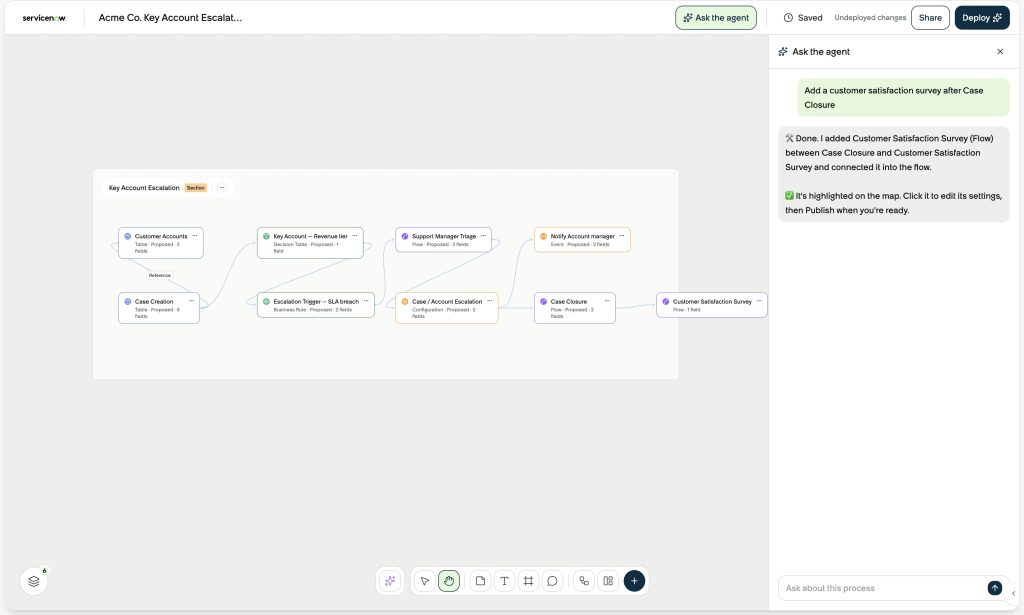
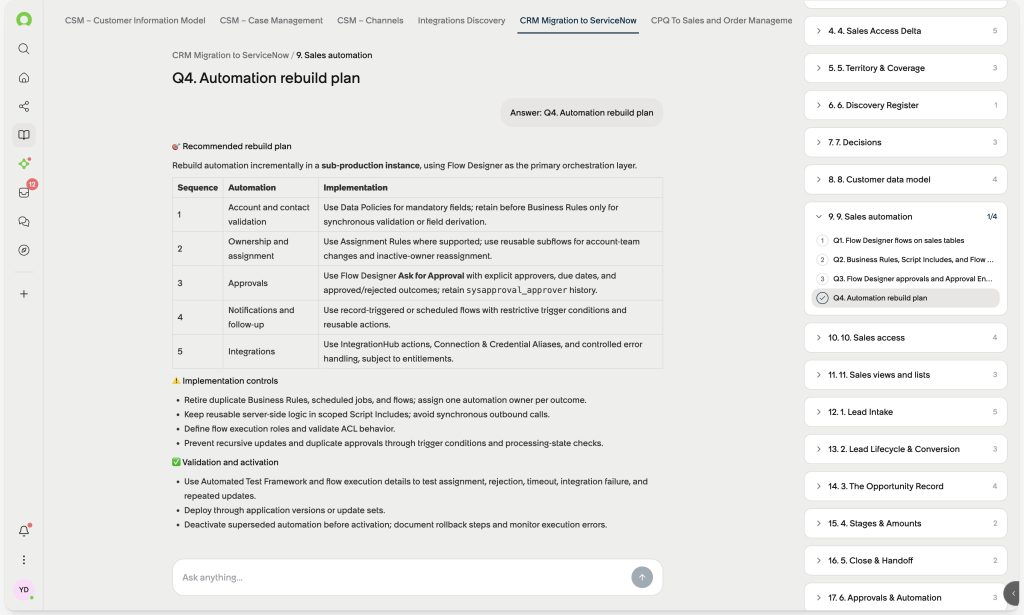
Autonomous CRM Engine is built around four stages: discover, design, build and monitor. It maps existing business processes, workflows, custom objects and integrations to establish how the CRM environment operates. Enterprises can then design a future state based on ServiceNow industry practices rather than replicate existing configurations. Approved changes can be built and deployed directly into the ServiceNow environment.
The monitoring capability is intended to address another weakness of traditional implementations: the gradual divergence between system configurations and changing business requirements. By identifying configuration drift and misconfigurations, the engine aims to prevent problems from escalating into support tickets or business disruption.
This could be particularly relevant in sectors where CRM is closely connected to operational and regulatory processes. Telecom providers, for example, must coordinate service activation and fulfilment, while financial institutions manage compliance-intensive onboarding and customer servicing. Retailers must also connect customer interactions with store operations and fragmented enterprise systems.
“Autonomous CRM Engine shortens the move from legacy systems to AI-native CRM to weeks, giving enterprises a practical path off legacy CRM platforms,” said John Ball, executive vice president and general manager, CRM & Industry Workflows at ServiceNow.
The longer-term ambition is to evolve the solution into an agentic layer that can help keep CRM environments running and improving as business needs change. This positions the product beyond migration automation, towards ongoing optimisation and governance of the CRM environment.
Autonomous CRM Engine is currently in Controlled Availability, with expanded capabilities planned for 2027. While the proposed deployment timelines are significant, the real test will be how effectively the solution handles the complexity of individual enterprise environments and delivers measurable improvements after implementation.
