

Critical software vulnerabilities, compromised developer packages and certificate security failures highlight why enterprises must reduce application exposure while accelerating patching and incident response.
A cluster of cybersecurity incidents in October has underscored a growing challenge for enterprise security teams: the time available to identify vulnerabilities, assess exposure and contain potential attacks is shrinking. In a new analysis, InstaSafe argues that organisations must complement faster patching with a more fundamental change—reducing the number of private applications that are directly reachable by unauthorised users.
The incidents discussed in the report span software runtimes, developer platforms, package distribution and digital certificate infrastructure. Together, they demonstrate how weaknesses in shared technology components can create risks across large numbers of systems, including environments where security teams may not have complete visibility into deployed software.
One key concern is the PHP2Shell vulnerability disclosure, which prompted organisations to review affected PHP runtimes and consider temporarily taking services offline where patch status could not be confirmed. The episode illustrates the operational dilemma facing enterprises: keeping systems available while uncertainty about their exposure remains unresolved. Updating an application alone may not address a vulnerability in the underlying runtime.
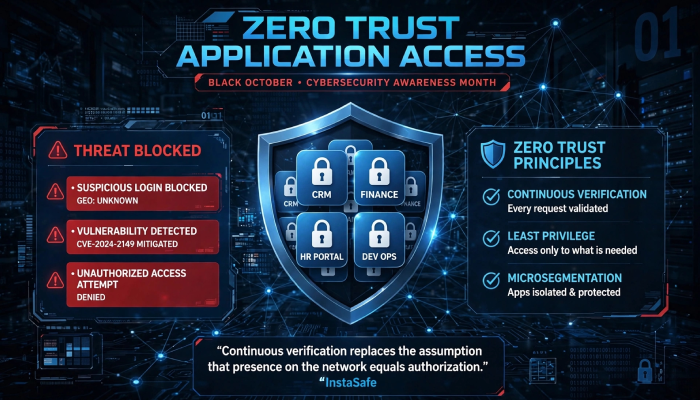
“Continuous verification replaces the assumption that presence on the network equals authorization.”
The report also highlights risks involving self-hosted GitLab, compromised software packages and weaknesses affecting certificate trust. These incidents reinforce the need for comprehensive asset inventories, dependency checks, credential rotation and reviews of certificate stores.
For enterprises, however, remediation alone may not be enough. Security teams need controls that restrict access while patches are tested and deployed. Zero Trust Application Access applies identity, device and contextual verification before granting access to private applications, reducing their exposure to unauthenticated scanning and limiting opportunities for lateral movement.
InstaSafe positions this approach as a practical layer of defence rather than a substitute for patching. Organisations should prioritise vulnerable systems, isolate assets when immediate remediation is impossible, enforce least-privilege access and maintain clear visibility into applications and credentials.
The broader lesson is that cyber resilience depends not only on how quickly vulnerabilities are fixed, but also on how much infrastructure remains exposed while that work is underway.
