

New UiPath for Coding Agents capability enables enterprises to build, deploy, govern, and scale AI-generated automations through natural language interactions
UiPath has announced UiPath for Coding Agents, a platform-wide integration designed to make coding agents enterprise deployable at scale. The new capability enables organizations to use coding agents alongside the UiPath orchestration platform to create, test, deploy, operate, and govern enterprise automations using natural language conversations.
The announcement addresses a major challenge enterprises face with coding agents today. While AI-powered coding assistants have rapidly gained popularity, they often remain disconnected from enterprise development workflows, governance controls, deployment pipelines, and security policies. As a result, organizations still rely heavily on manual processes and human intervention to connect coding agents with operational systems and production environments.
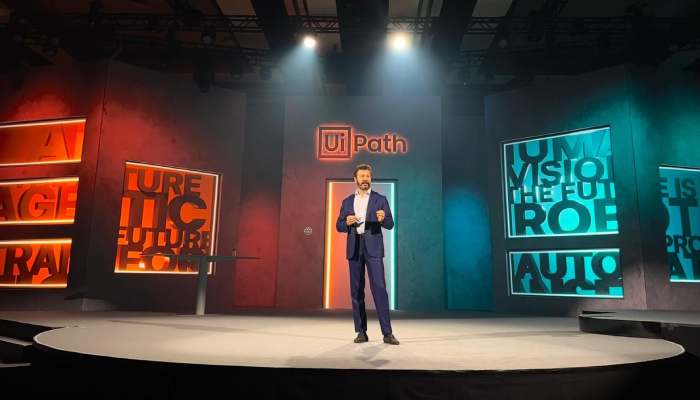
“The emergence of coding agents signals a fundamental shift in the definition of a builder on our platform. We are first to market with a platform that treats AI-generated automations as first-class citizens, with the governance, reliability, and scale enterprises demand,” said Daniel Dines, CEO and founder of UiPath.
UiPath aims to bridge this gap through a unified orchestration layer that integrates coding agents directly into enterprise workflows. The platform supports multiple coding agents rather than forcing enterprises to rely on a single vendor. This open architecture allows organizations to deploy tools such as Claude Code or OpenAI Codex across different teams while remaining flexible enough to adopt future AI models.
A key differentiator is the orchestration foundation built into the platform. UiPath provides centralized observability, execution, governance, and integration with existing CI/CD infrastructure and testing frameworks, ensuring that AI-generated automations can move seamlessly from development to production.
The platform also incorporates built-in governance capabilities including policy enforcement, audit trails, credential vaults, runtime controls, and role-based access management. These controls ensure that automations created by both developers and coding agents follow enterprise-grade compliance and security requirements.
UiPath believes the integration will significantly improve productivity for both technical and non-technical users. Developers can accelerate testing and deployment processes, while business analysts, process owners, and domain experts can create and refine automations simply by describing requirements in natural language.
Initially available with support for Claude Code and OpenAI Codex, UiPath plans to expand integrations with additional coding agents throughout 2026 as enterprises increasingly adopt AI-driven automation strategies.
