

Setting the Stage: A Region at a Crossroads
The waters of the Gulf have always carried more than shipping cargo these waters carry sovereignty, humanitarian responsibility, and the economic heartbeat of a region whose energy corridors and commercial ports are globally significant.
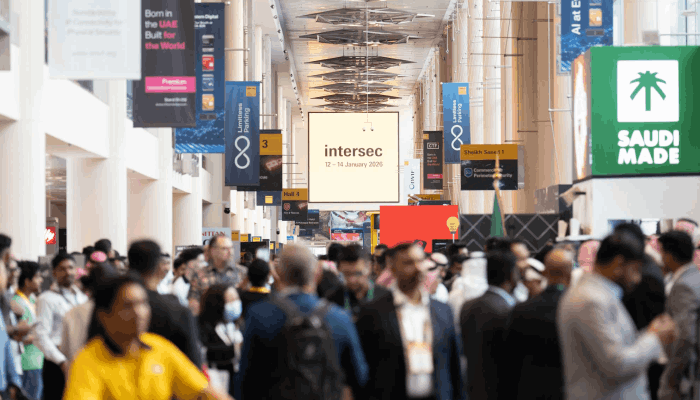
In January 2026, with geopolitical pressures intensifying and maritime risks growing more complex, senior leaders across defence, intelligence, border security, and critical infrastructure gathered at Intersec 2026 in Dubai. The event, long known as a global nexus for security, hosted a high‑impact, closed‑door roundtable designed not just to discuss threats but to set a new strategic direction.
Hosted by Kearney in partnership with Intersec, the session titled “Governing the Blue: Intelligence‑Led Security for Gulf Maritime Boundaries” brought together operational commanders, senior policymakers, and technology leaders to reimagine how Gulf states can secure their maritime borders under mounting pressures.
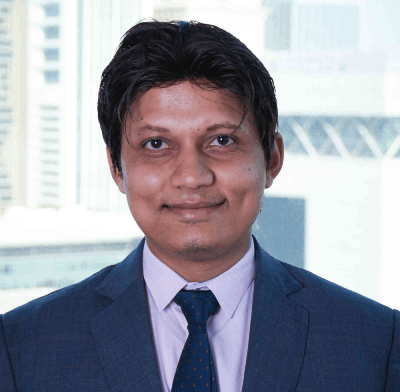
“Intelligence must be embedded, trusted, and connected if we are to secure the Gulf’s maritime future.”
— Ankit Gandhi, Partner, Kearney MEA
This was not a general industry conversation. It was a strategic recalibration one focused on embedding intelligence, strengthening governance models, and accelerating cross‑agency alignment across the GCC.
From Reactive to Intelligence‑Led: A Shift in Philosophy
One of the strongest themes emerging from the discussion was the recognition that reactive maritime security models are obsolete.
For decades, responses in many regions were triggered after an event occurred. But the Gulf’s evolving operational reality from coastal threats to cyber disruptions to irregular migration now demands predictive, intelligence‑driven operations.
As moderator Ankit Gandhi emphasised:
“Across the Gulf, maritime security challenges are no longer episodic they are continuous and converging.”
Participants agreed that intelligence must now guide both collection and action, driving a holistic shift in how maritime missions are led, resourced, and executed.
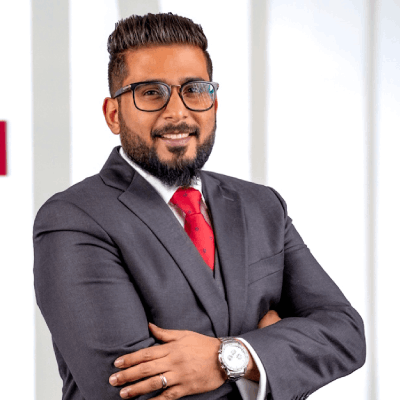
“Intersec is where senior leaders shape frameworks that governments can act on — not just discuss.”
— Dishan Isaac, Show Director, Intersec
Embedding Intelligence Into the Command Chain
The roundtable’s key conclusion was that intelligence can only deliver impact when structurally embedded into command functions.
Core elements discussed included:
• Multi‑INT Mission Teams
Fully integrated units combining SIGINT, HUMINT, GEOINT, and OSINT to support operational commanders.
• 24/7 Fused Maritime Watch Centres
Dedicated hubs for real‑time situational awareness and rapid decision-making.
• Policy & Planning Units
Specialised teams aligned with national strategies and legal frameworks to ensure that maritime decisions are timely, transparent, and accountable.
The outcome: faster operational speed, shared accountability, and enhanced clarity during high‑stakes incidents.
As one delegate framed it:
“Intelligence not placed at the centre stays peripheral and so do the outcomes.”
The Human Dimension: Migration and Humanitarian Realities
The roundtable also acknowledged that Gulf maritime missions are increasingly shaped by humanitarian pressures, including maritime migration and rescue operations.
Leaders stressed that these scenarios must be operational priorities, not procedural afterthoughts.
Common pain points discussed included:
- breakdowns at inter‑agency handovers
- unclear authority during humanitarian crises
- inconsistent ownership of safeguarding responsibilities
To address these gaps, participants argued for:
- apparent authority to avoid hesitation
- shared risk pathways to ensure accountability
- owned outcomes across all agencies involved
This human‑centric approach aligns with the region’s broader commitment to safe, dignified maritime governance.
Technology: Critical Enabler, Not the Driver
Technology investment across the GCC is accelerating from satellite sensing to unmanned systems to AI‑driven maritime analytics. But the roundtable underscored a vital principle:
Technology must follow governance, not lead it.
Two anchor requirements emerged:
1. Secure, resilient communications
To support lawful, auditable inter‑agency data sharing.
2. A unified, standardised data fabric
Allowing maritime stakeholders to fuse inputs from:
- radars
- satellites
- drones
- open-source feeds
- coastal surveillance systems
Gandhi cautioned:
“Technology adds value only when it is aligned to decision rights. Cyber resilience is an organisational design challenge, not just a technical one.”
Delegates agreed that without interoperable digital foundations, capability modernisation will remain fragmented.
Joint Operations: A Defining Opportunity
The changing maritime environment shaped by economic expansion, political complexity, and evolving threat vectors presents an opportunity for the GCC to adopt enhanced joint operational models.
Opportunities highlighted included:
- greater intelligence interoperability
- stronger cross‑agency mission cohesion
- regionally aligned standard operating procedures
- combined humanitarian and security outcomes
The Gulf’s strategic environment requires multi‑agency synchronisation that is predictive, not reactive; coordinated, not siloed.
From Discussion to Action: The White Paper Ahead
Kearney will now consolidate the roundtable outcomes into a comprehensive white paper set for release shortly.
The paper will outline:
- a capability framework for intelligence‑led maritime governance
- digitally connected command models
- structural recommendations for joint operations
- humanitarian integration mechanisms
- technology and data architecture guidance
Its aim is to support GCC policymakers and operators navigating modern maritime challenges.
Intersec’s Role: Convening Leadership Beyond the Exhibit Floor
Intersec 2026 served as far more than an exhibition it was a platform for strategic alignment.
Dishan Isaac, Show Director at Messe Frankfurt Middle East, emphasised:
“Intersec provides a neutral platform where government, industry and international experts can align on governance, leadership and operating models.”
These closed‑door sessions underscore Intersec’s importance as a catalyst for intelligence‑led resilience, not just a showcase of technologies.
The 27th edition hosted:
- 1,200+ exhibitors
- an anticipated 50,000 security, safety, and fire experts
- participants from 60+ countries
The roundtable stood out as one of its most strategically influential gatherings.
Conclusion: A New Maritime Era for the GCC
The Intersec 2026 roundtable marks a turning point for Gulf maritime security.
It signalled a future built on:
- intelligence‑led governance
- fused operational models
- modernised digital foundations
- shared humanitarian responsibility
- region‑wide interoperability
The GCC is stepping into a maritime era where intelligence is not an adjunct but the engine of security where governance is proactive, and where the region’s waters are protected through collaboration, clarity, and connected capabilities.
